

Easter Images from a 1k year-old Bible
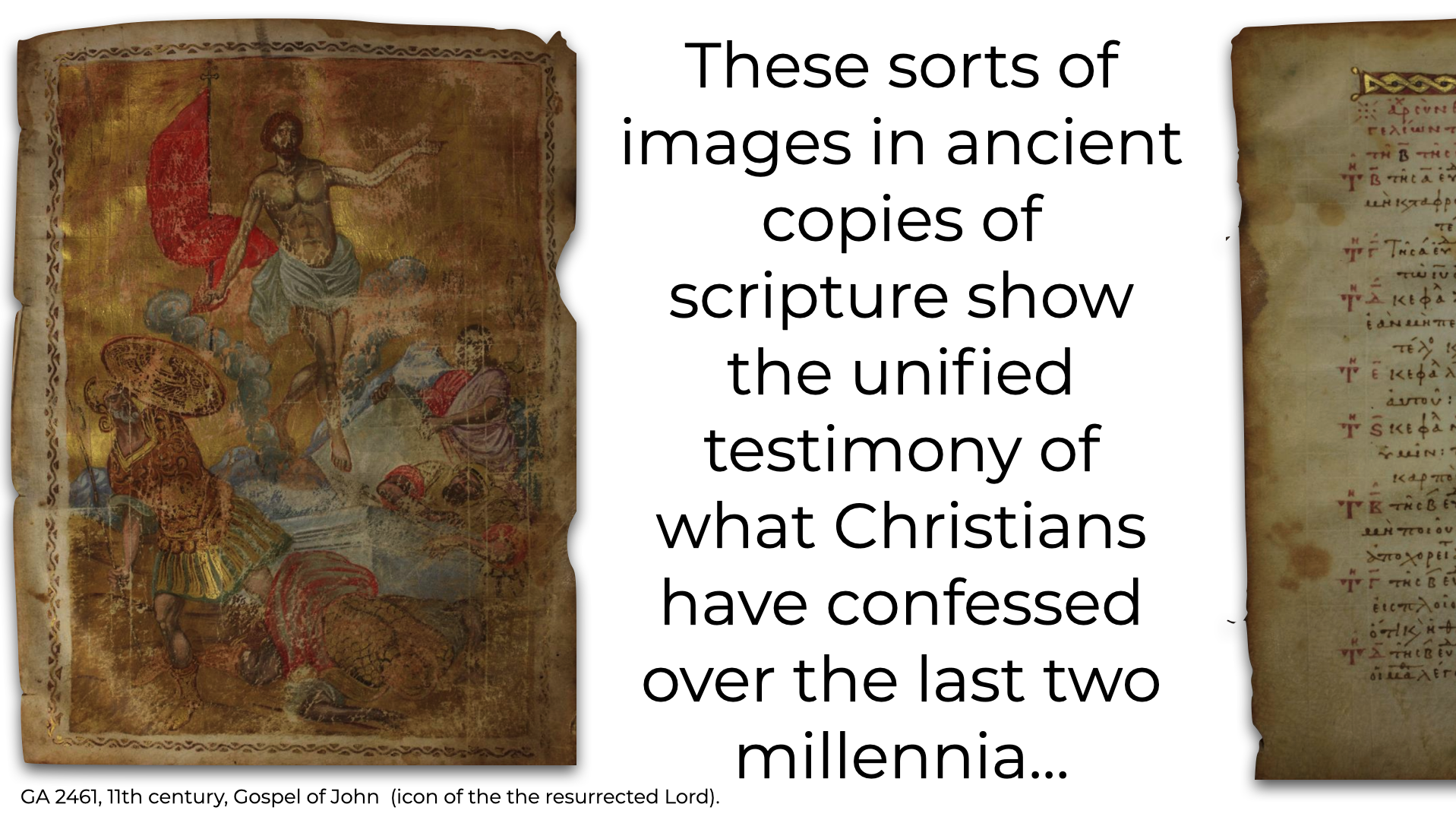
This is GA 2561, a copy of the Gospel of John from the 11th century. GA 2561 is written in minuscule Greek and contains numerous scenes painted on the parchment depicting the life of Jesus. These sorts of images in ancient copies of scripture show the unified testimony of what Christians have confessed over the last two millennia…




Ancient Christian hymns
This is P.Heid IV. 292, a 2nd or 3rd century papyrus that preserves nine fragmentary lines from an early Christian Easter hymn celebrating the resurrection of Christ with an antiphonal refrain…


Palimpsests: The secret lives of manuscripts hidden underneath
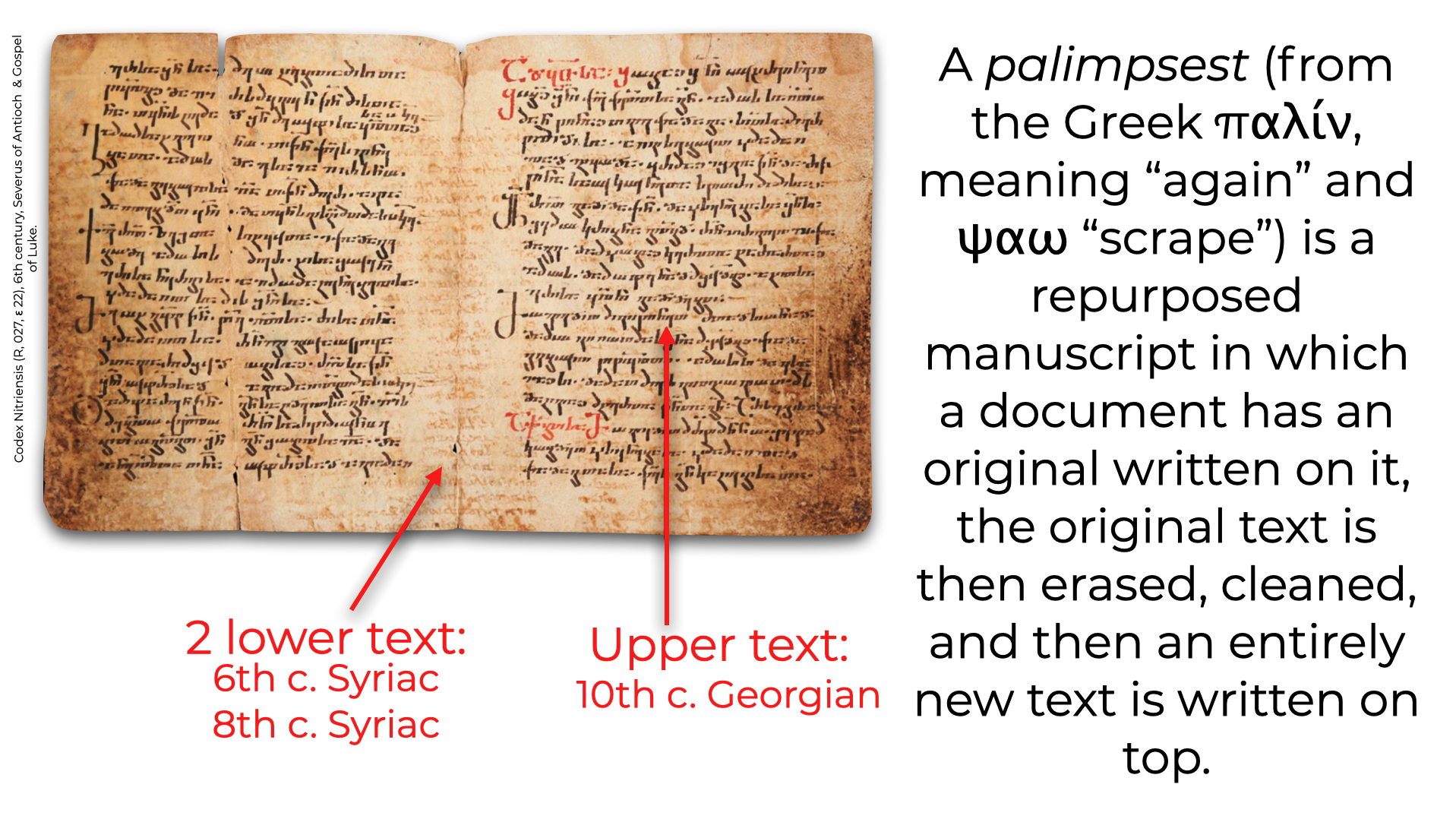
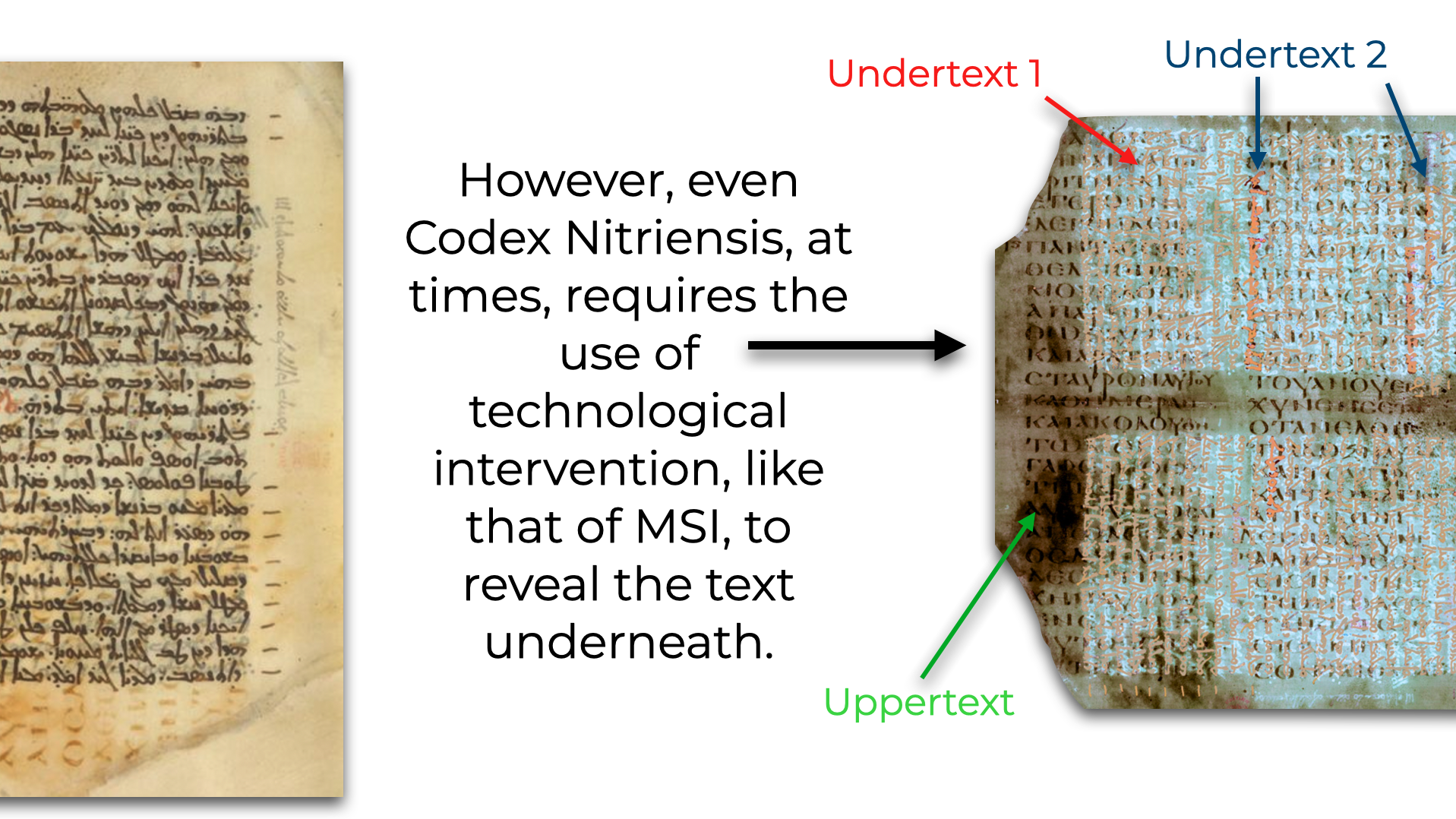
Palimpsests contain an important contribution to our understanding of the history of the biblical text. It has been estimated that as much as 20% of ancient New Testament manuscripts are palimpsests.* Yet every time we discover these secret and hidden texts they never radically alter our understanding of the biblical text, but instead, work to time and time again confirm what we thought the words of scripture said all along.





The Holy Spirit and ancient Greek manuscripts
This is P.Fay. 91, dated to the year 99 AD. This papyrus document was an employment contract for a woman named Thenetkoueis, where the Greek term ἀρραβὼν is used to refer to a down-payment of 16 drachma (approx. $872 USD) with the contractual promise of further payment.


What is the Sassoon manuscript and does it really deserve the hype?
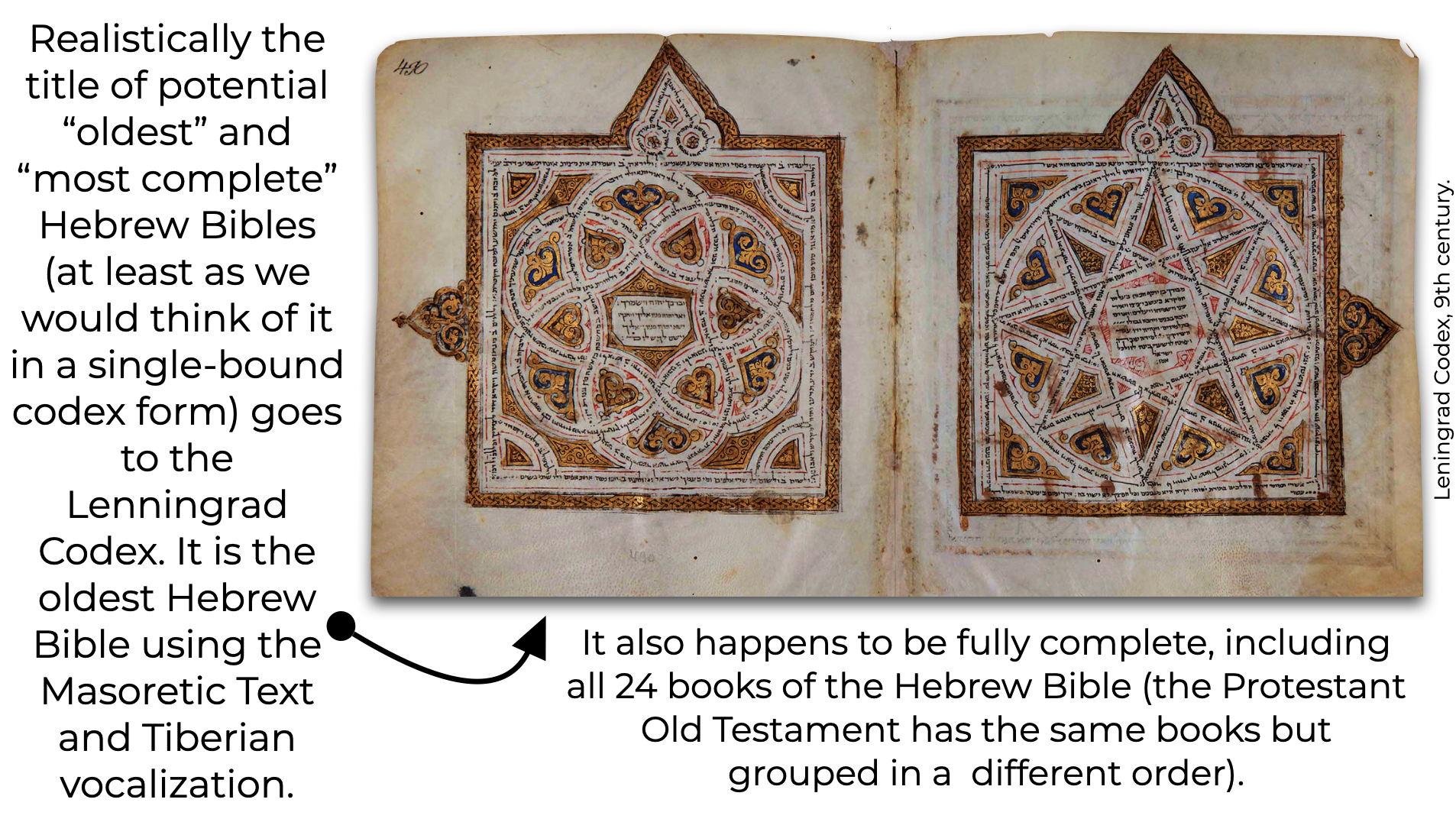
Codex Sassoon has been in the news a lot lately due to its recent addition to the auction floor at Sotheby’s auction house. Expected to fetch somewhere between $30-50 million, it’s being described as “the oldest and most complete Hebrew Bible.” But is the hype warranted? Let’s clear up a few details together.




20 years ago this week I was healed from being a paralytic
Just before my 12 birthday, back in 2003, I was diagnosed with a rare neurological condition that left me paralyzed from the waist down. Told by doctors that my chances of walking were extremely rare due to the speed at which the inflammation on my spinal cord happened.


Who was Nimrod?
Nimrod, was an ancient Mesopotamian King mentioned a couple times in the Bible. Apart from these two passages in scripture the name “Nimrod” in Hebrew(נִמְרוֹד), or any other Ancient Near Eastern language for that matter, appears in no other place in or outside of the Bible. His identity, details of his life or influence on Ancient Near Eastern culture are a complete mystery.


Unrolling the charred remains of ancient biblical books with Xrays
This is the Ein-Gedi scroll, a 2nd or 3rd century manuscript that holds the charred remains of a section of Leviticus. Although it was discovered in 1970, the technology in order to ascertain the contents was not available until 2016.


The Jewish Messiah described by the Dead Sea Scrolls
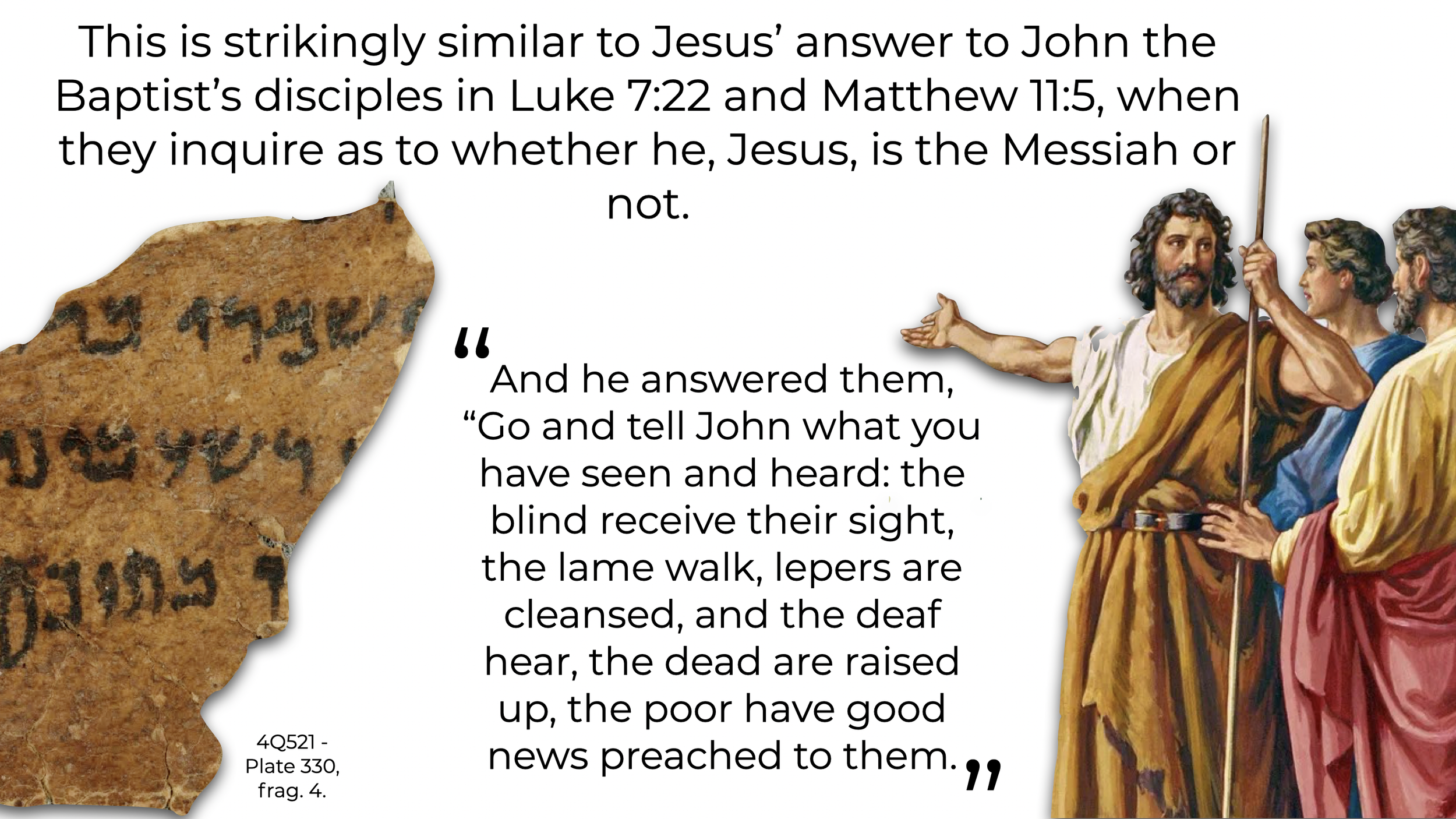
This is 4Q521, a series of fragments originally from a scroll of the Dead Sea Scroll collection. It dates to the 2nd or 1st century BC, and gives a description of the Jewish Messiah from the perspective of the Jewish Essene Qumran community.




When Bible manuscirpts disagree
The textual differences in the manuscript tradition of the Bible are numerous. There could be as many as 600 000 differences between all of the hand-written copies of the New Testament. However, when it comes to these differences it isn’t so much the number that counts as it is the nature of the variances.


Was Jesus a carpenter? How ancient contracts help answer that question
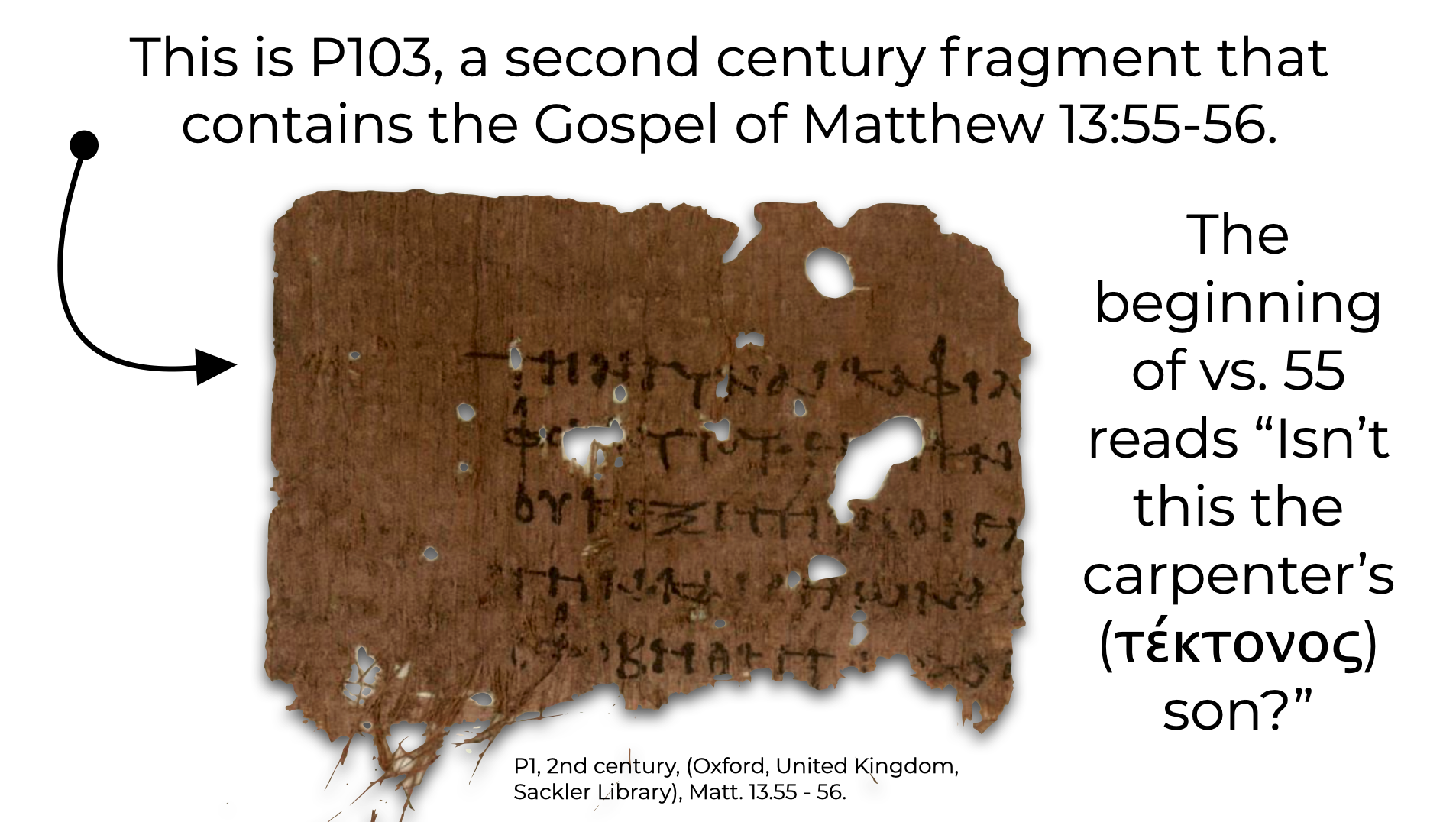
P103, a second century fragment that contains the Gospel of Matthew 13:55-56. The beginning of vs. 55 reads “Isn’t this the carpenter’s (τέκτονος) son?” A “tektōn” (τέκτον) could qualify as a skilled craftsman or craftsman of a number of different varieties…



New Year's message from Codex Alexandrinus
Housed in the British Library, Codex Alexandrinus (aka GA 02) includes a 1500 year-old near complete Bible. It’s missing portions are due to damage and lost pages. Nonetheless, it is one of our oldest Genesis to Revelation copies of the Christian scriptures in one volume.


Christmas Isn't Pagan
Growing up I was taught that the date of Christmas, December 25th, was a borrowed pagan festival. I couldn’t tell you exactly when or where, but I remember being told (more than a few times) that there were a myriad of ancient pagan festivals like Sol Invictus, Saturnalia, Brumalia, and European feasts like Yule, that also took place on the 25th of December.

Growing up I was taught that the date of Christmas, December 25th, was a borrowed pagan festival. I couldn’t tell you exactly when or where, but I remember being told (more than a few times) that there were a myriad of ancient pagan festivals like Sol Invictus, Saturnalia, Brumalia, and European feasts like Yule, that also took place on the 25th of December.
“The Christians,” the narrative went, “moved the celebration of Christ’s birth to the place of these other pagan festivities in order to make it easier for converts and/or to encourage pagans to convert.”
In many ways this story made sense. Why not supersede, redeem, and cover-up the former pagan festivals with a Christian celebration? Christen and baptize these already celebrated days with a new meaning that moved new and inquiring Christians away from the darkness of their former heathen worship and fill it with light?
I was sometimes told, certain pagan activities were inevitably smuggled in, sometimes purposefully and other times completely unintentionally. Christmas trees, holly, wreathes, and so on, were all grandfathered trappings of a previous pagan context, forgotten and replaced. These decorations were incorporated into Christmas and over time their original meaning was lost and simply associated with the Christian celebration rather than their former pagan beginnings.
All of that, however, is bogus.

Christmas manuscripts (Part 4)
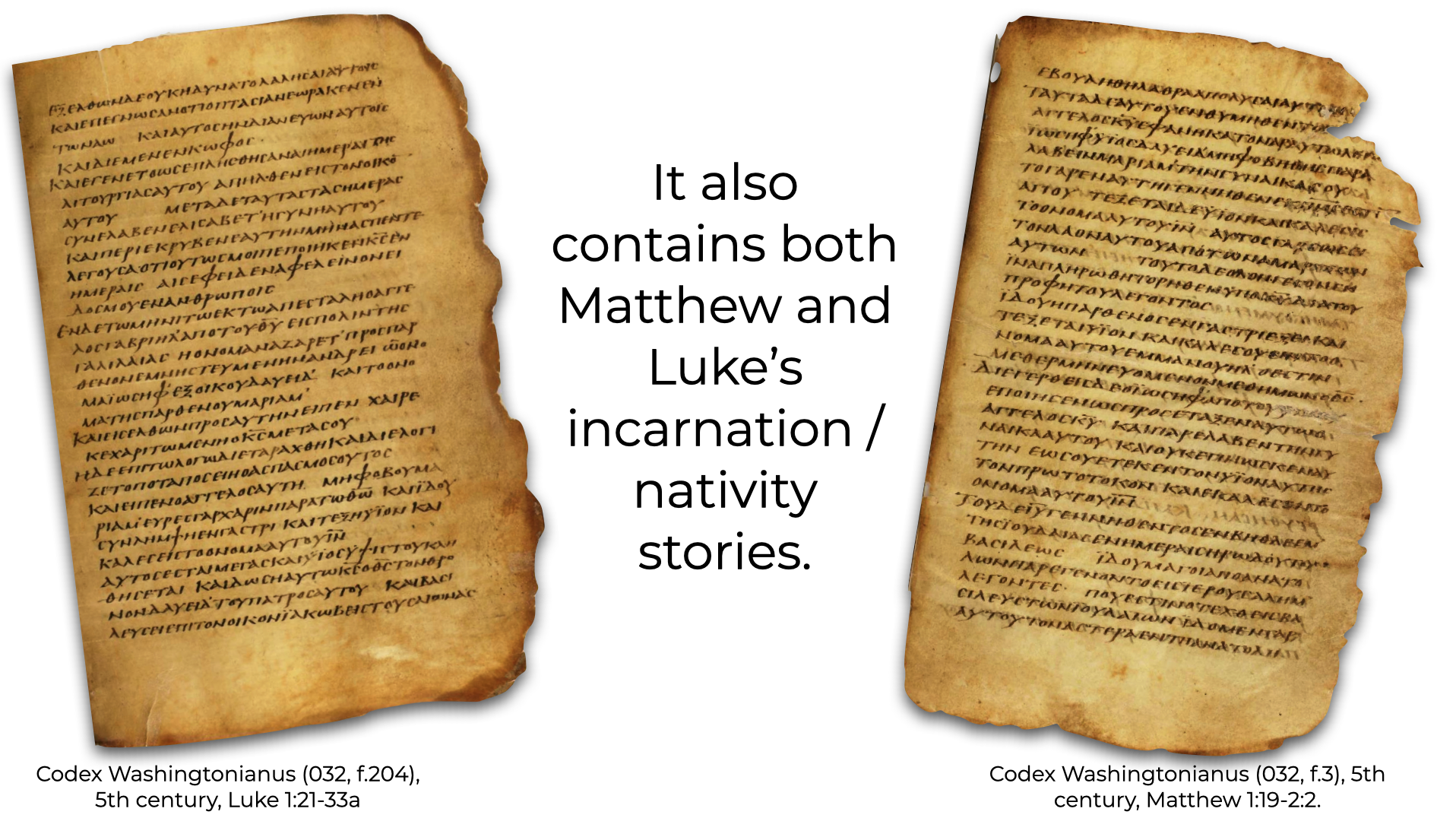
This is Codex Washintonianus, a 5th century copy of the Gospels written in Greek on vellum (animal skin). It also contains both Matthew and Luke’s incarnation / nativity stories.




Christmas manuscripts (Part 3)
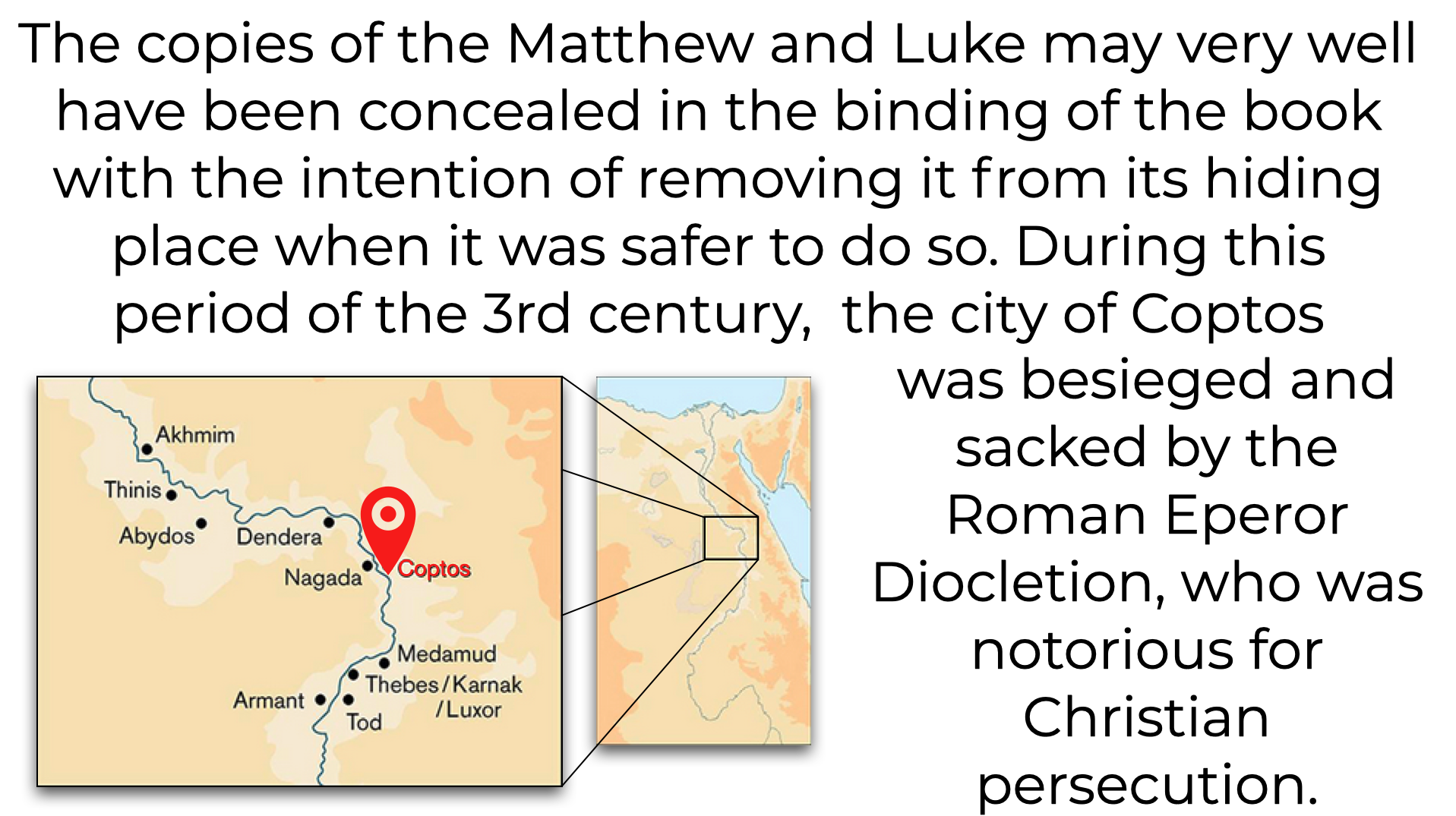
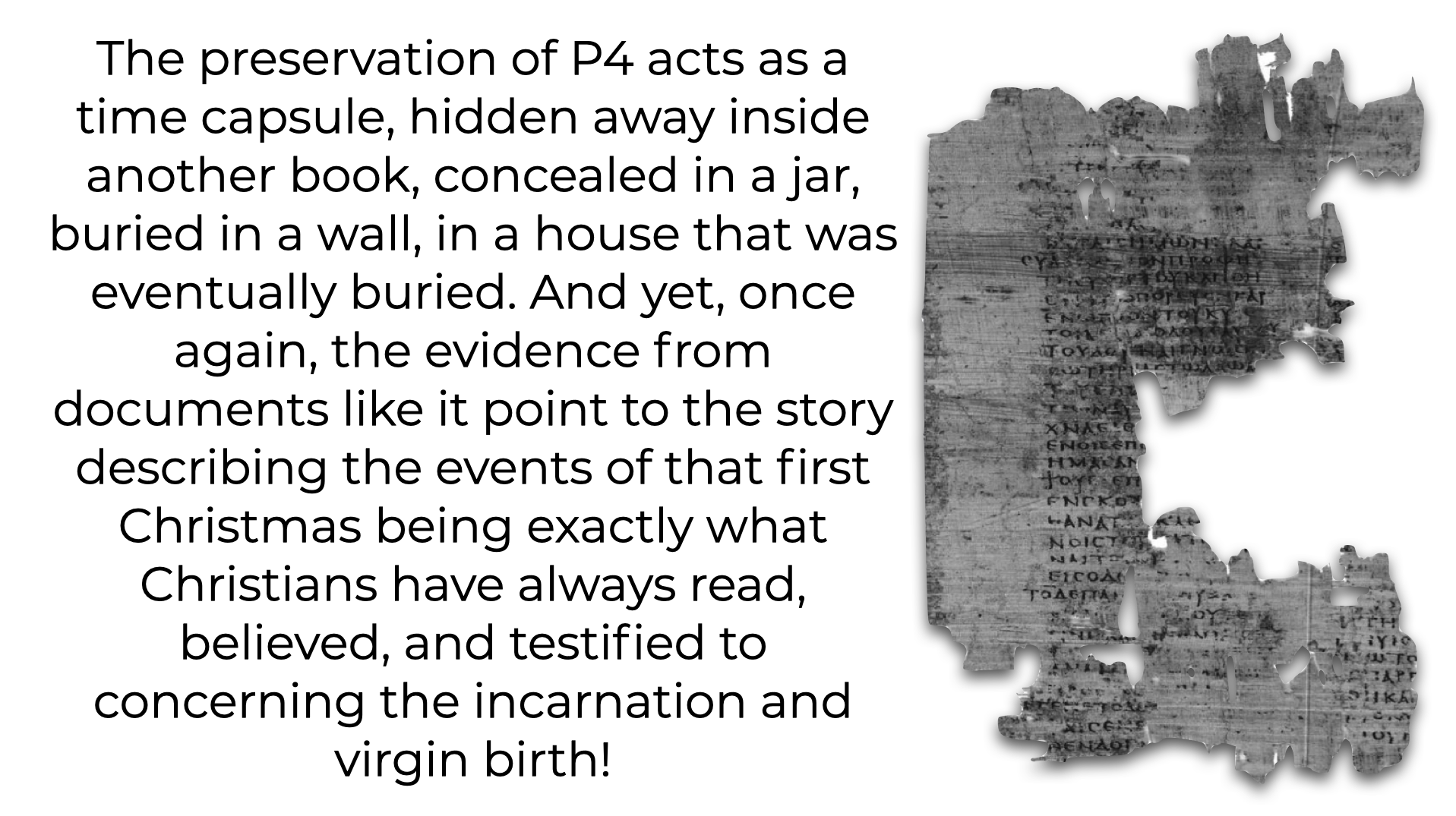
The preservation of P4 acts as a time capsule, hidden away inside another book, concealed in a jar, buried in a wall, in a house that was eventually buried. And yet, once again, the evidence from documents like it point to the story describing the events of that first Christmas being exactly what Christians have always read, believed, and testified to concerning the incarnation and virgin birth!





Christmas manuscripts (Part 2)
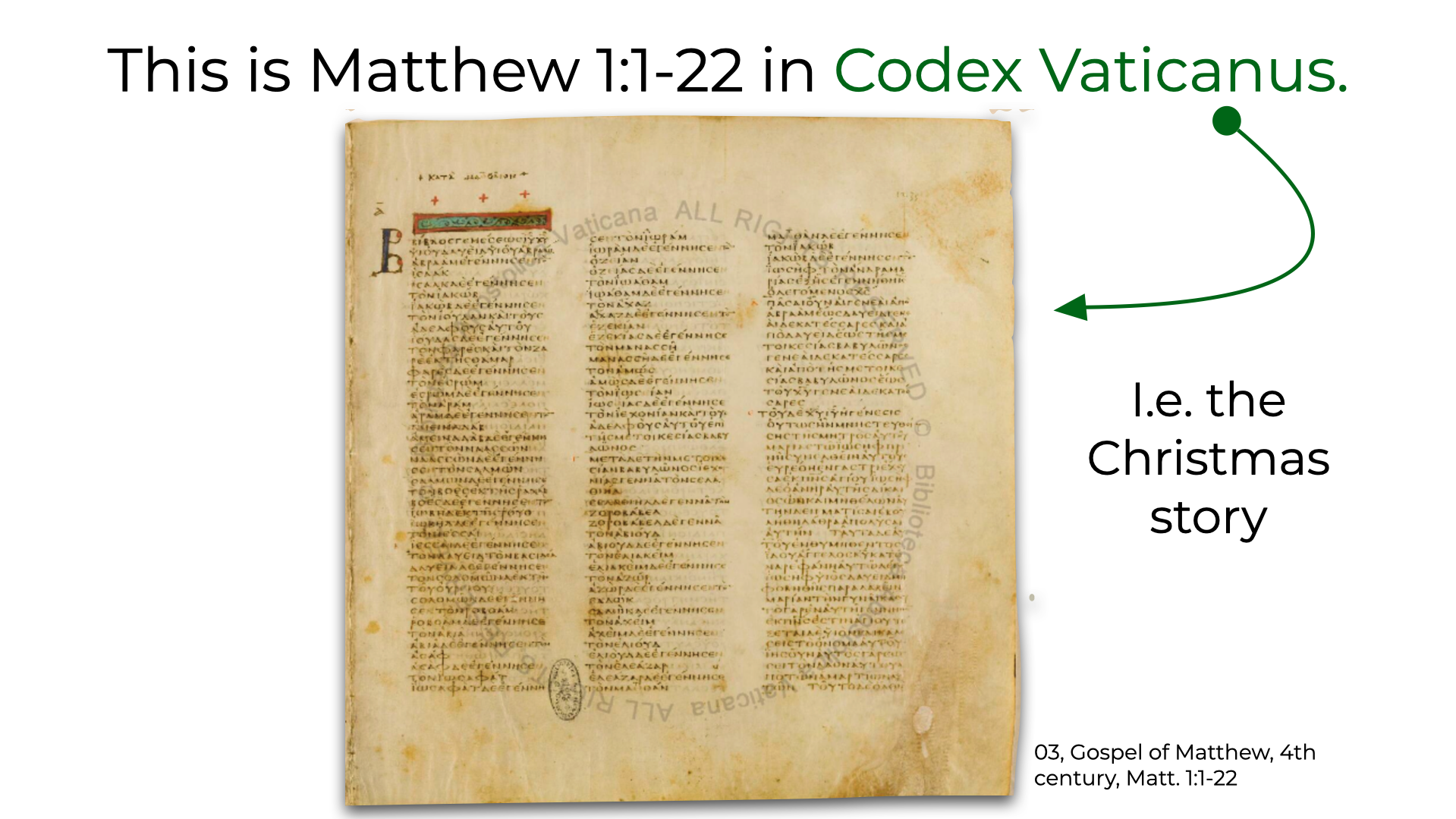
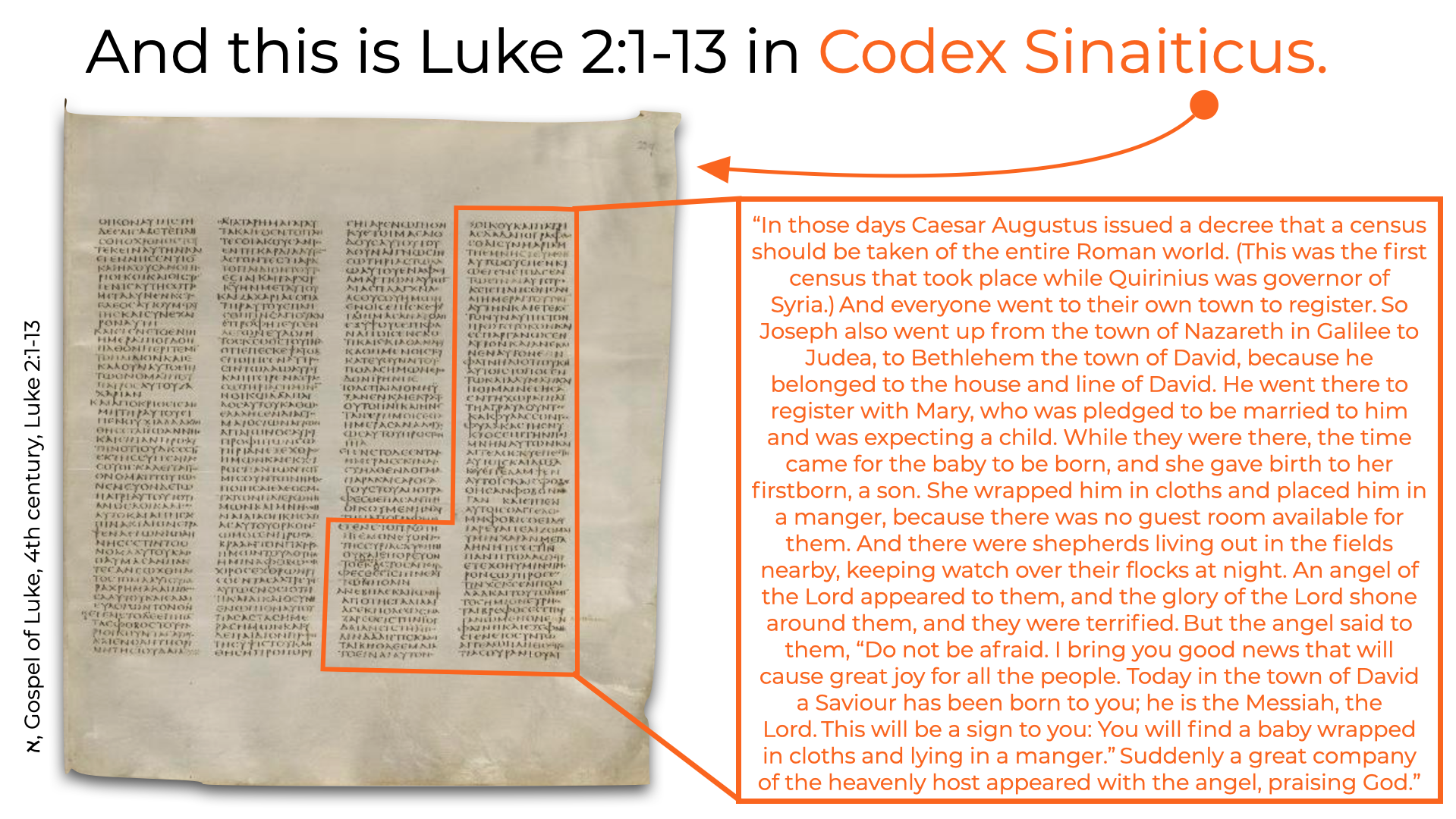
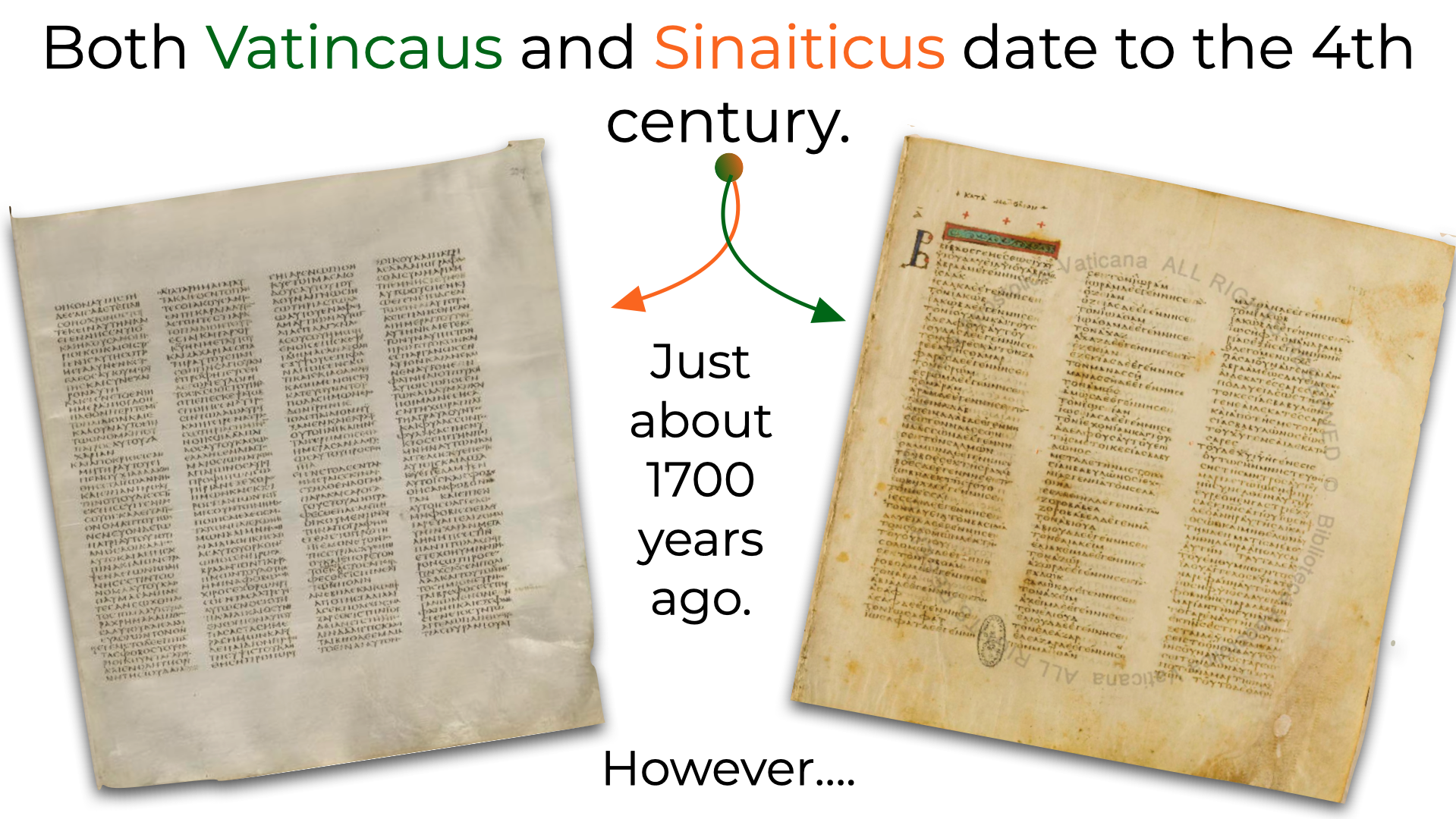
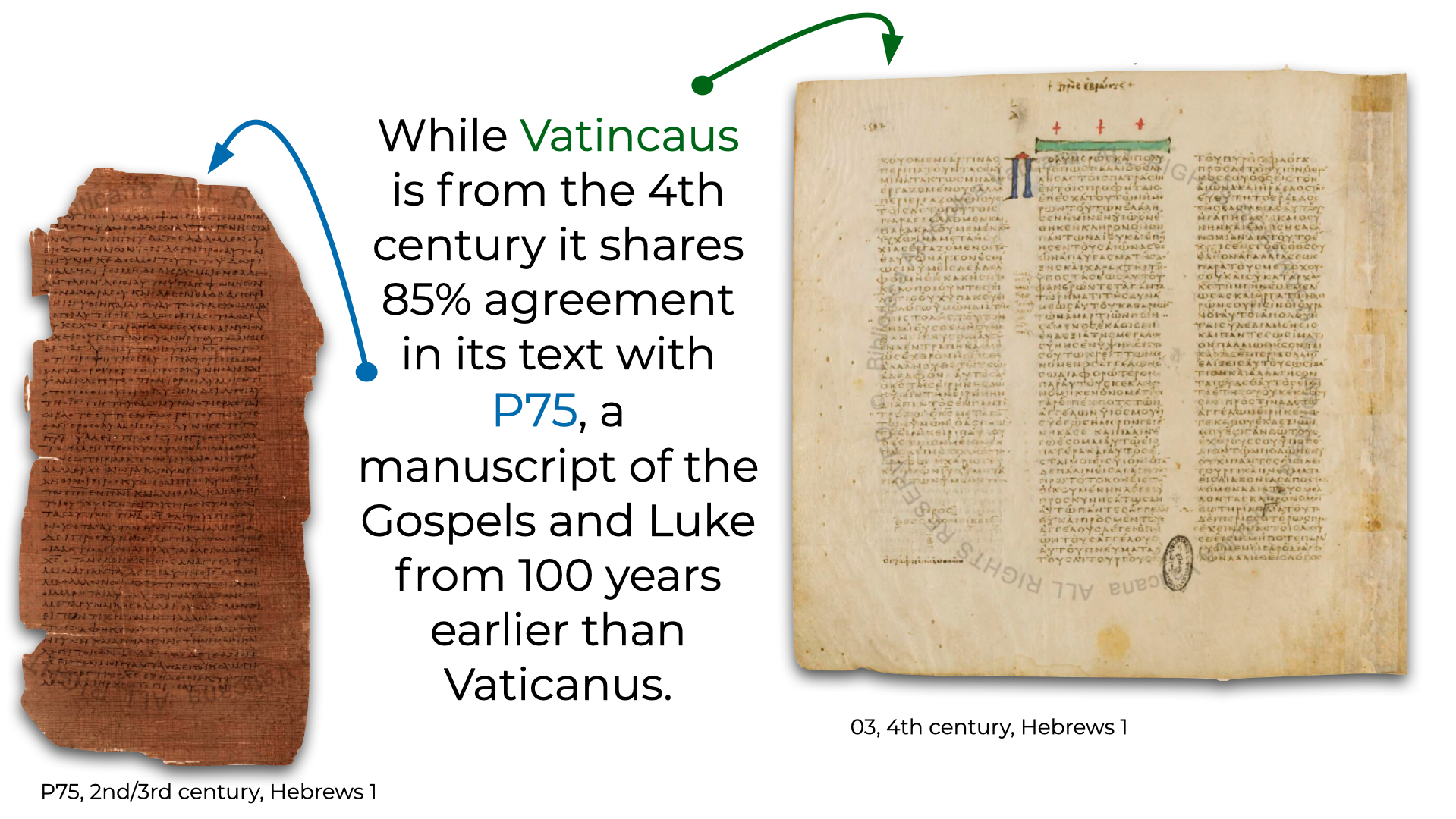
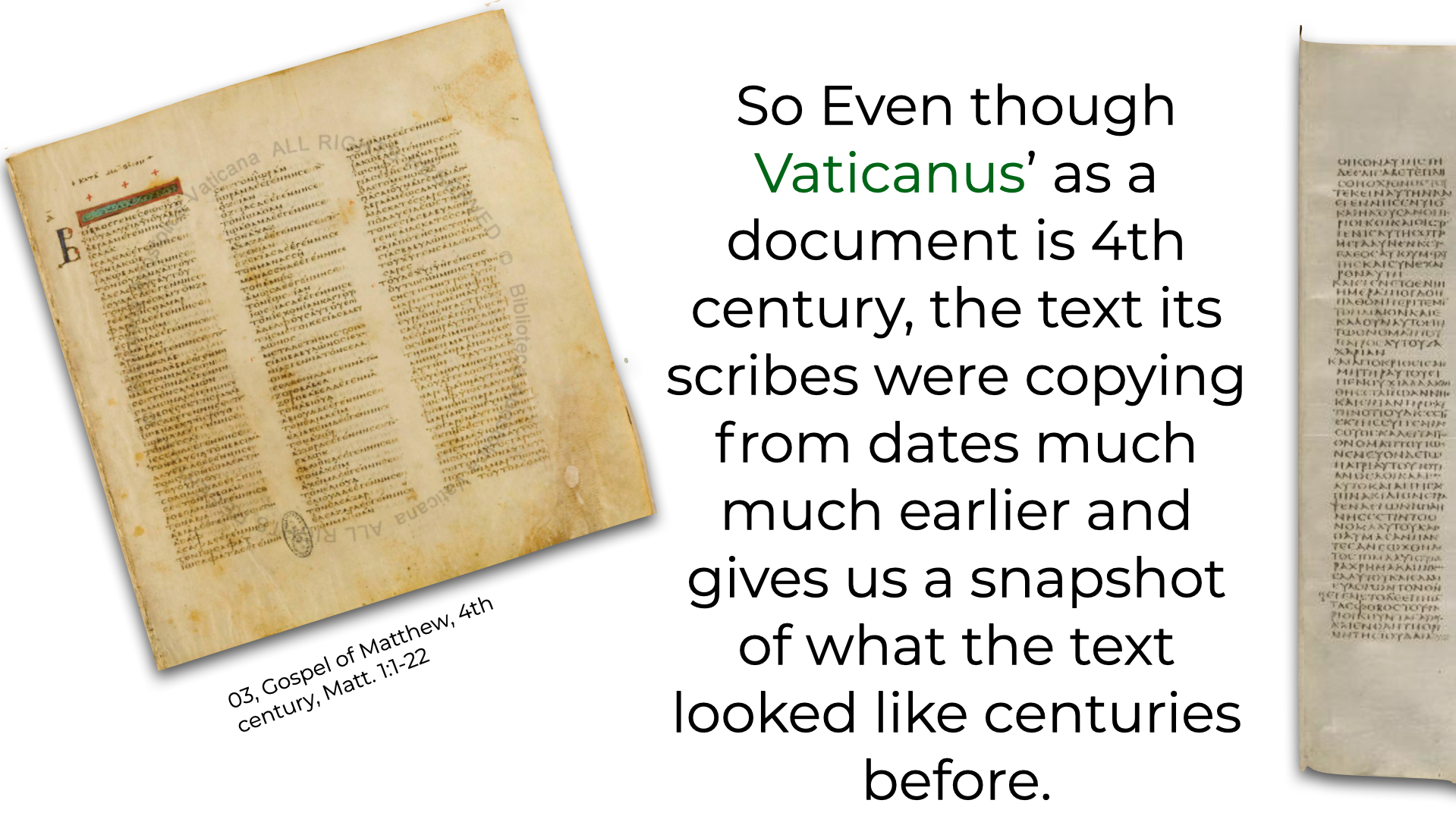
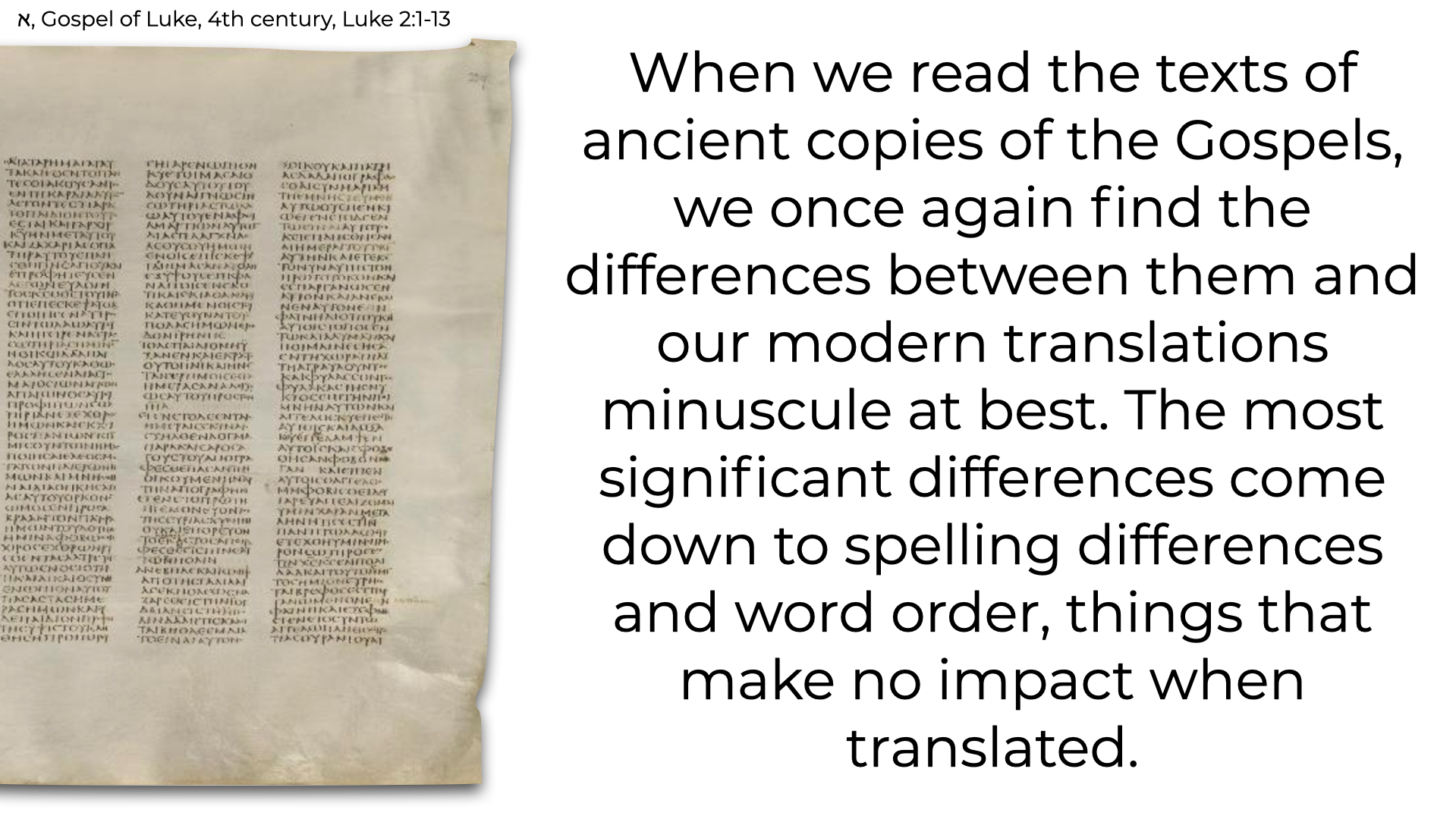
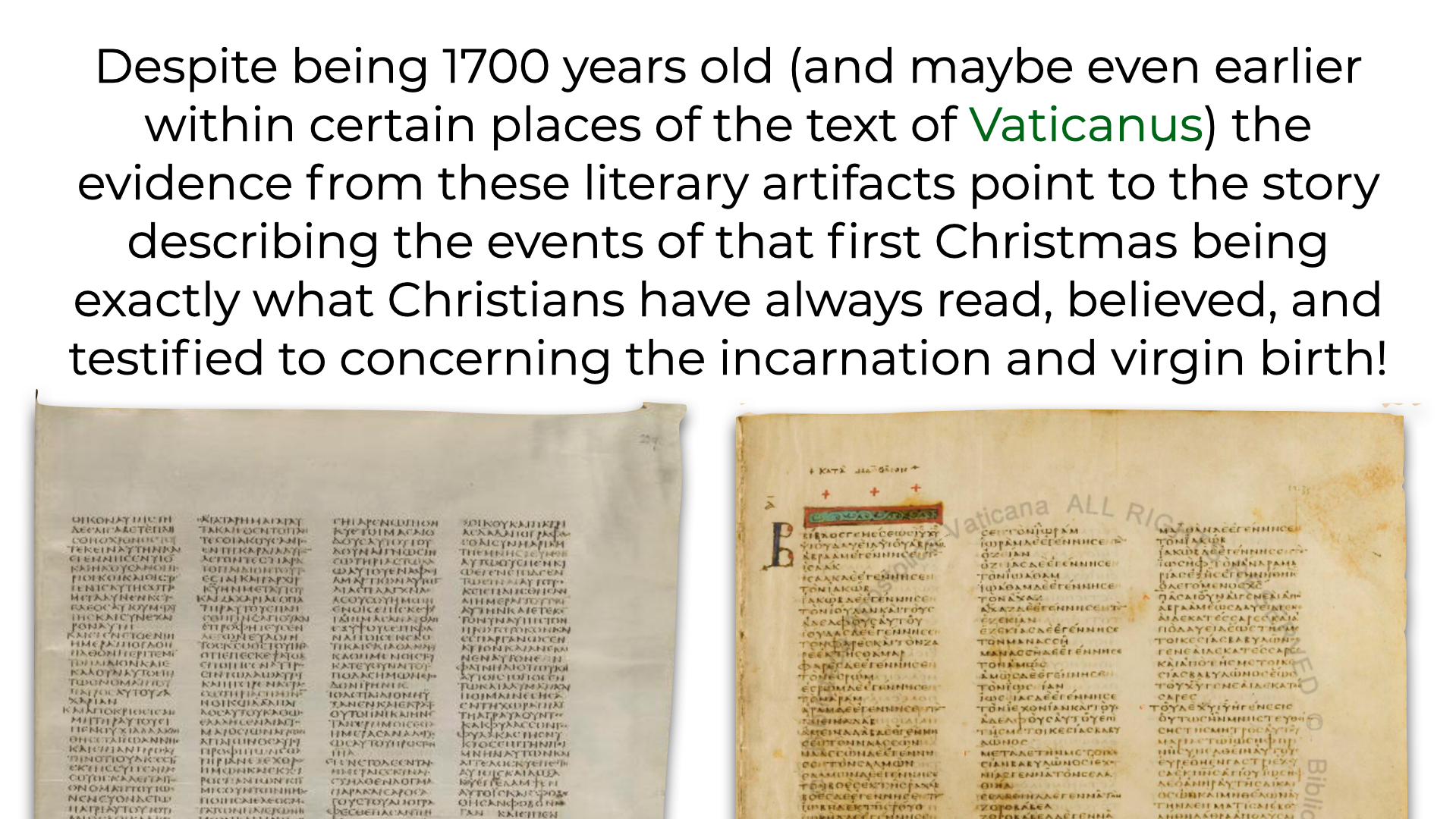
Despite being 1700 years old (and maybe even earlier within certain places of the text of Vaticanus) the evidence from literary artifacts like Codex Vaticanus and Sinaiticus point to the story describing the events of that first Christmas being exactly what Christians have always read, believed, and testified to concerning the incarnation and virgin birth!


Christmas manuscripts (Part 1)
All of the evidence from these literary artifacts point to the story describing the events of that first Christmas, being exactly what Christians have always read, believed, and testified to concerning the incarnation and virgin birth!


That time a scribe badly messed up Jesus' genealogy
We see the scribe made a pretty big blunder in copying Luke’s genealogy of Jesus. This copy of the Gospels (with a commentary included afterwards) is largely generic, except for one very careless mistake made by the scribe…


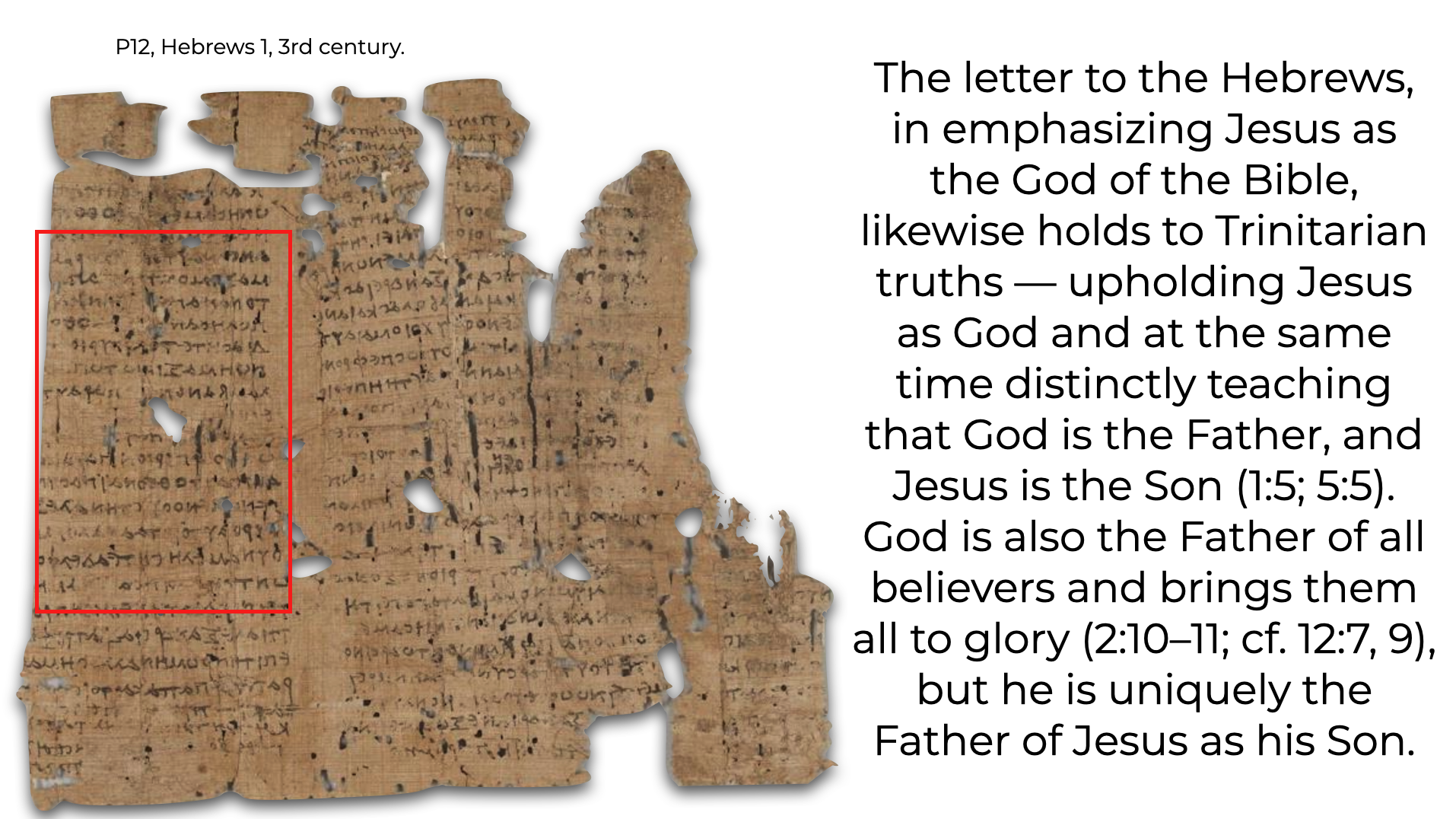
Where the author of Hebrews calls Jesus God
The author of Hebrews, right at the beginning of his letter (1:8), makes a very interesting statement “about the Son.” “The Son” in the context is Jesus, yet the author of Hebrews goes on to say “about the Son” a quote from Pslam 45:6-7…




Where the apostle Paul explicitly calls Jesus God
Paul, at 1 Corinthians 8:6, expands the well known passage from Deuteronomy 6:4 and inserts Jesus. In writing to the Corinthians Paul is redefining monotheism as Christ-centred monotheism.


