

Christmas manuscripts (Part 1)
All of the evidence from these literary artifacts point to the story describing the events of that first Christmas, being exactly what Christians have always read, believed, and testified to concerning the incarnation and virgin birth!


That time a scribe badly messed up Jesus' genealogy
We see the scribe made a pretty big blunder in copying Luke’s genealogy of Jesus. This copy of the Gospels (with a commentary included afterwards) is largely generic, except for one very careless mistake made by the scribe…


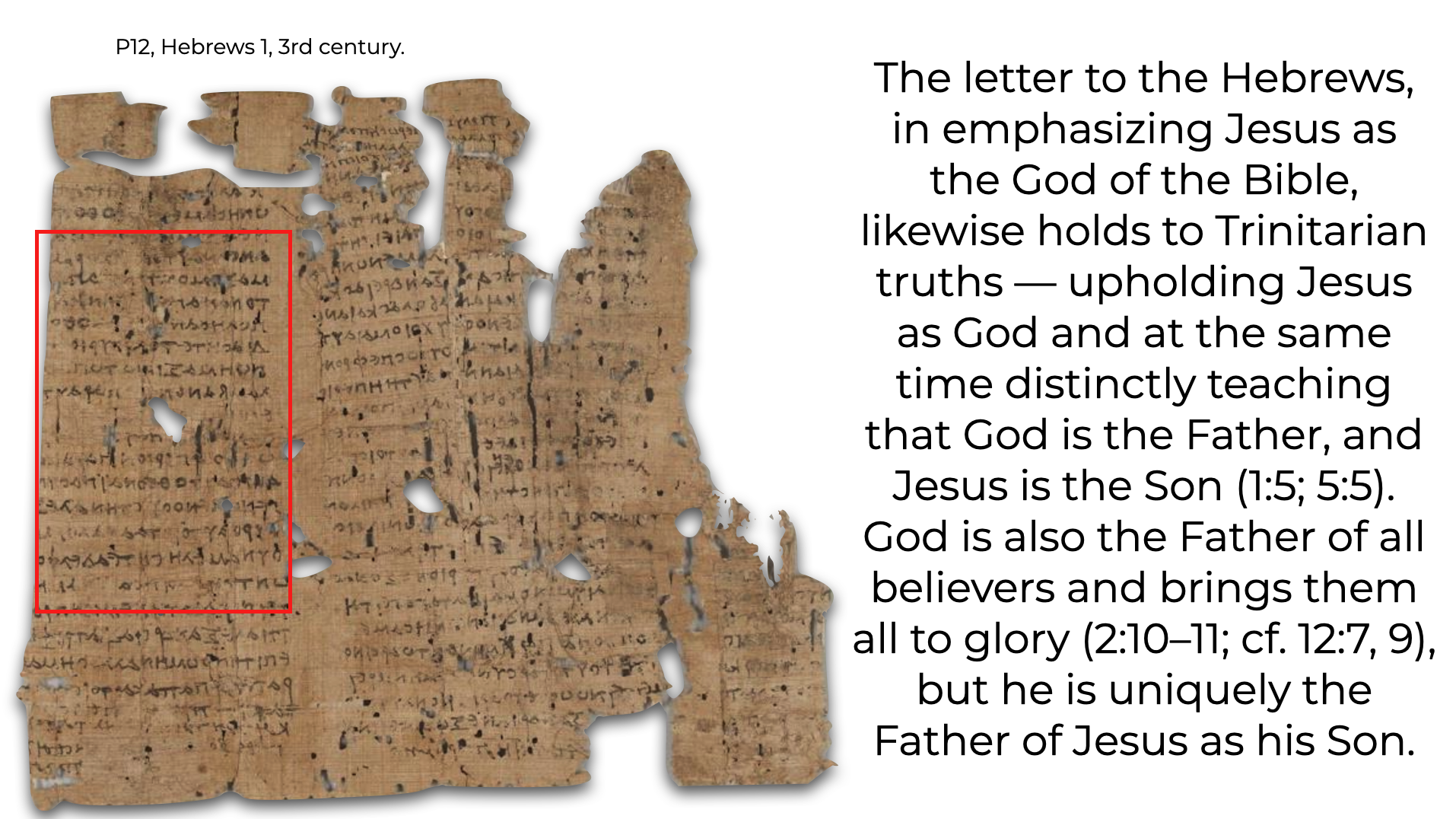
Where the author of Hebrews calls Jesus God
The author of Hebrews, right at the beginning of his letter (1:8), makes a very interesting statement “about the Son.” “The Son” in the context is Jesus, yet the author of Hebrews goes on to say “about the Son” a quote from Pslam 45:6-7…




Where the apostle Paul explicitly calls Jesus God
Paul, at 1 Corinthians 8:6, expands the well known passage from Deuteronomy 6:4 and inserts Jesus. In writing to the Corinthians Paul is redefining monotheism as Christ-centred monotheism.


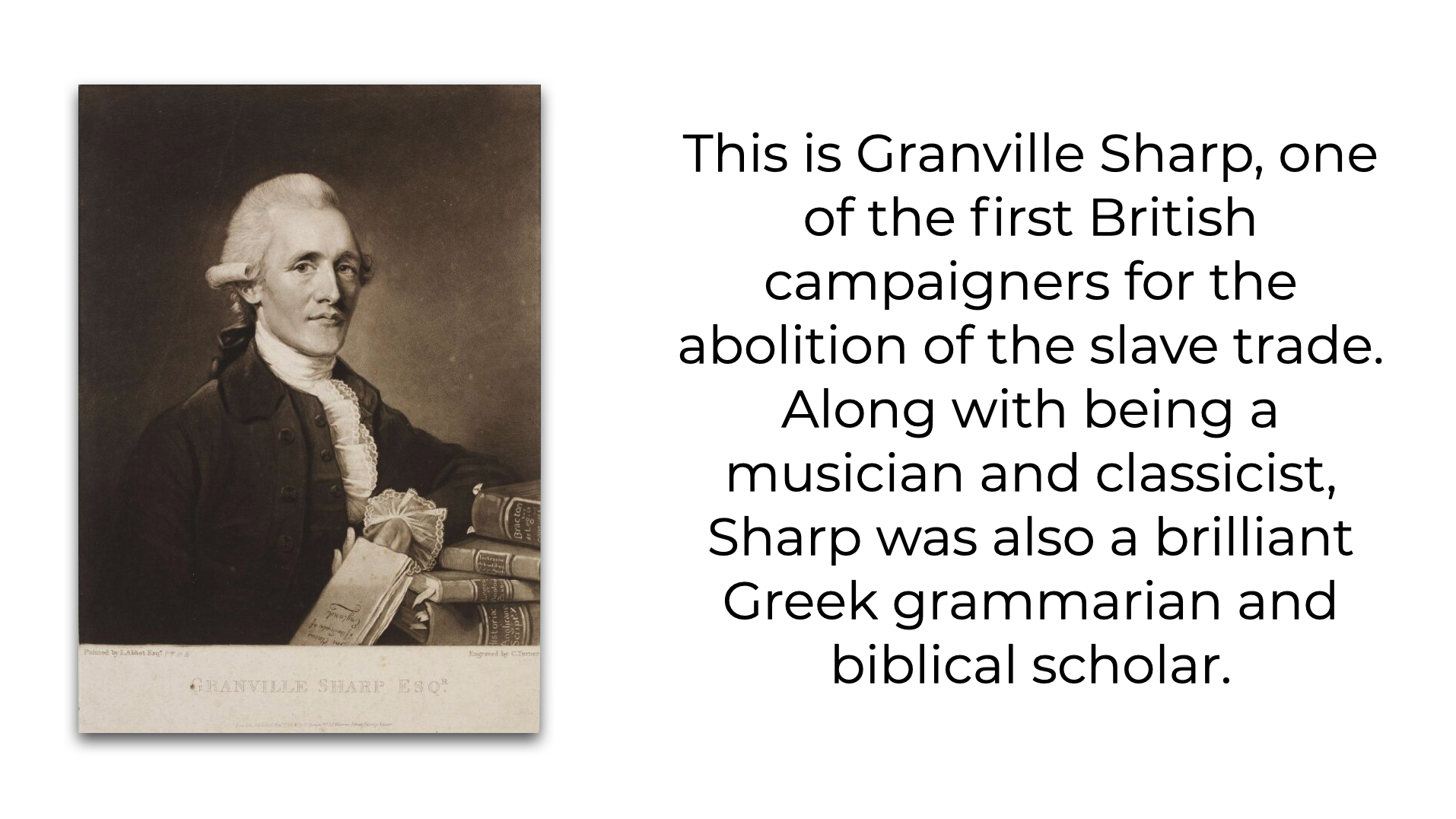
You should know who Granville Sharp is
Granville Sharp, was one of the first British campaigners for the abolition of the slave trade. Along with being a musician and classicist, Sharp was also a brilliant Greek grammarian and biblical scholar. Yesterday, Nov. 10th, was his birthday.



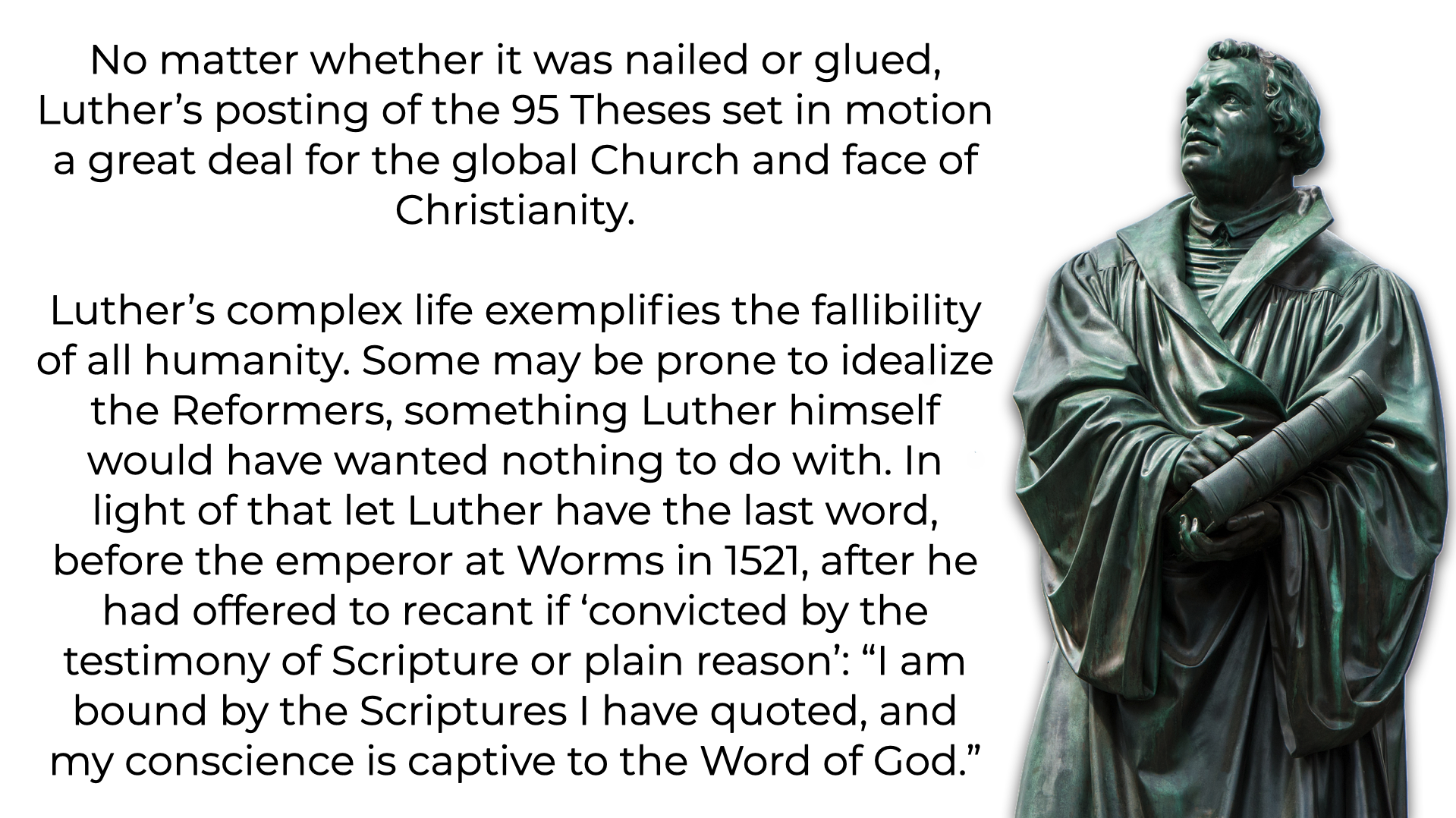
Luther (probably) didn't nail the 95 Theses
One of the most famous catalysts for the start of what eventually became known as the Protestant Reformation was Luther’s 95th Thesis, which were famously reported to have been nailed to the Castle Church in Wittenberg, on October 31st, 1517…



Who took verses out of your Bible?
If you open up to nearly all modern English translations of the Gospel of John, at 5:4 you’ll notice something conspicuous. It goes from verse 3 to verse 5. So who took out verse 4? The answer to that question leads us back to the earliest surviving copies of John. Copies like our two 3rd century manuscripts of John like P75 and P66…


Ancient manuscripts made from snail spit
This is a 6th century Greek New Testament and one of the “purple codices.” Its pages are velum (calf skin), dyed purple, with both silver and gold leaf used for the lettering…


What is the "Jesus fish?"
This is P.Oslo Inv. 303, a manuscript from the 4th century that acted as a Christian amulet. It is written in Greek and was used as an invocation to ward off evil from the household. This type of written appeal was popular in Egypt throughout antiquity. The inscription ends with an Alpha Cross Omega, Symbol of Christ, and the word Ichthus (Ίχθύς).


How ancient toilet paper might help us understand Paul
The ultimate fate of P.Oxy4633, a 3rd century papyrus commentary on Homer, a part of the Oxyrhynchus collection, was…. toilet paper.


What is the Gospel of Jesus' Wife?
10 years ago, Dr. Karen King, a senior Harvard historian in early Christianity, gave an announcement across from the Vatican that an ancient papyrus in which Jesus speaks of “his wife” had just been discovered…


The British Monarchy and the most famous English Bible
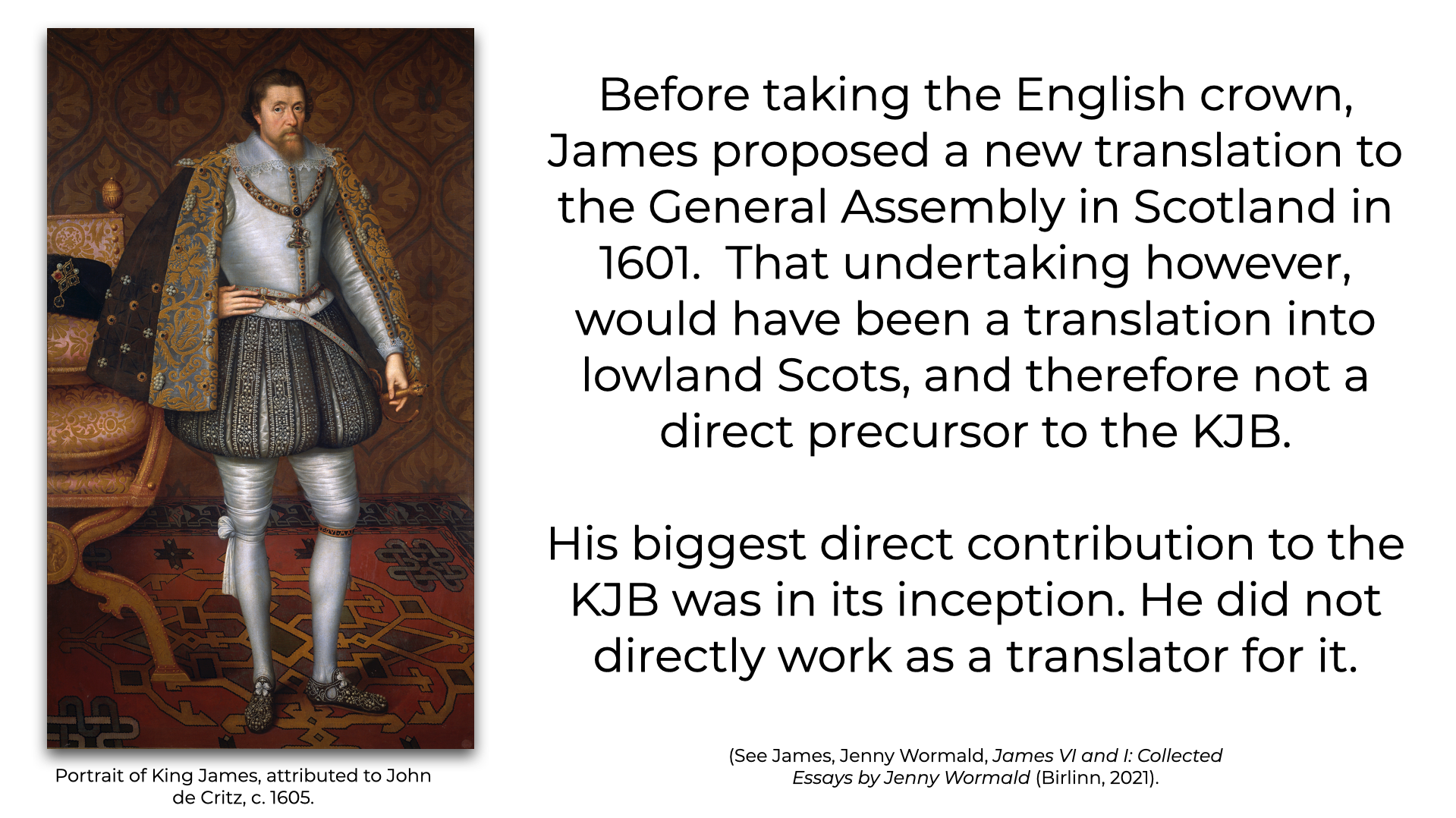
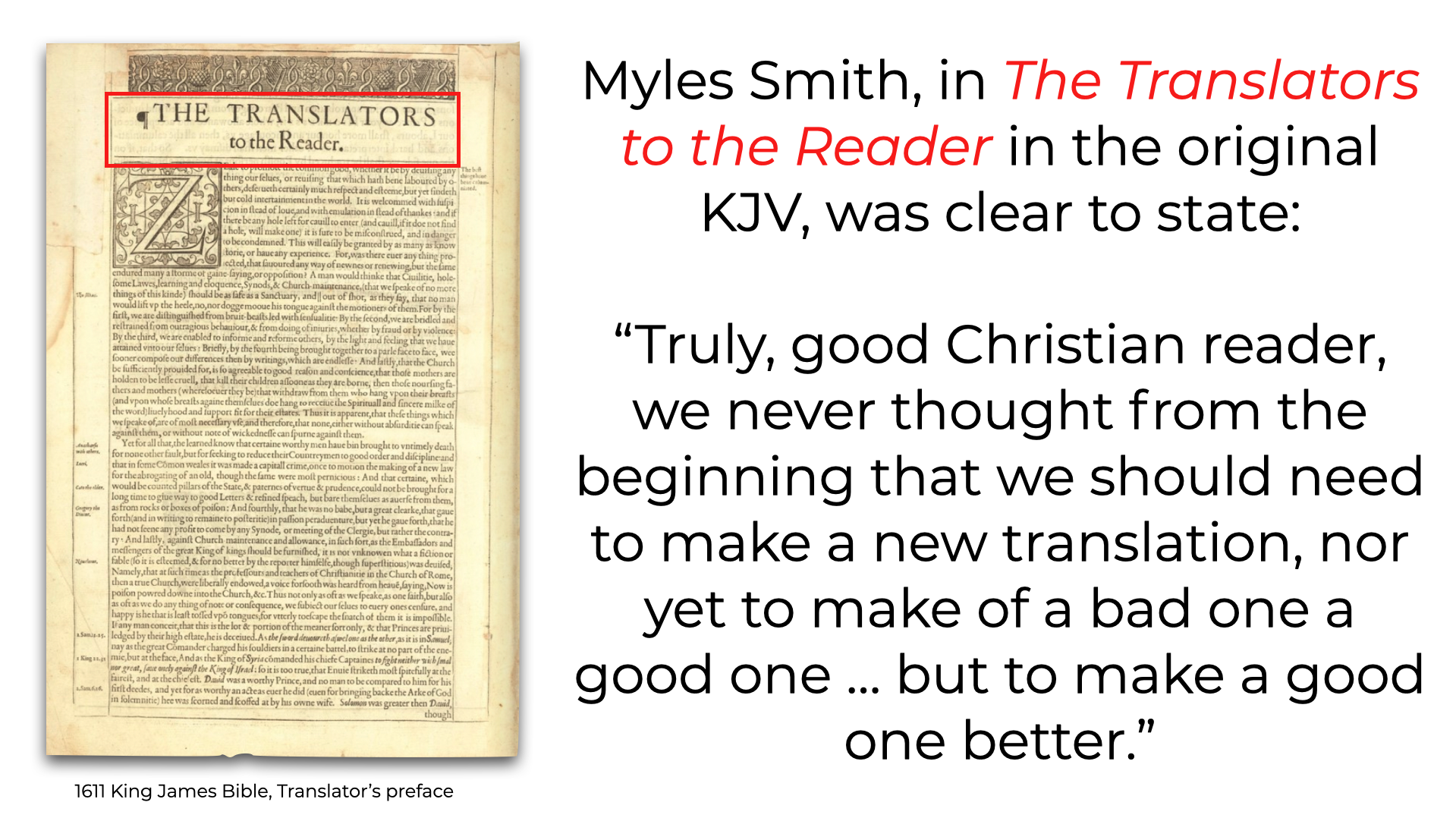
The King James Bible was commissioned in 1604 and published in 1611. The beginning of it had a dedication to the King of England. James was potentially the most scholarly king to ever sit on the English throne. He produced his own commentary/paraphrase of Revelation, and even his own translation of the Psalms…






Is the number of the beast REALLY 666?
Everyone knows the number of the beast from the biblical book of Revelation, right?It’s 666. That’s just common knowledge! Or is it…


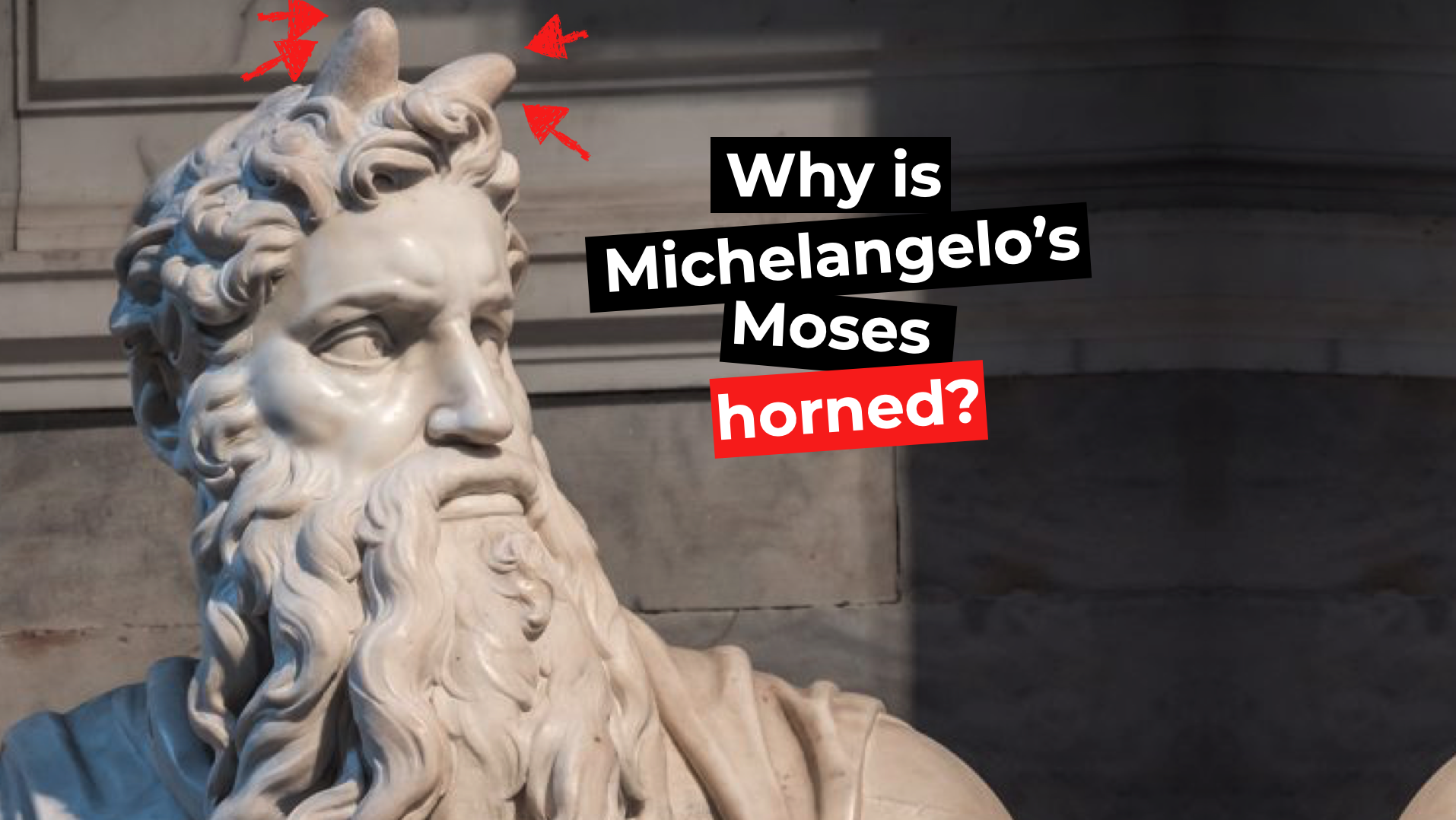
Why is Michelangelo's Moses horned?
Because of the Latin Vulgate's (the Latin translation of the Bible that stood as the Bible of the church for a thousand years) influence we have portrayals all throughout the Middle Ages and into the Renaissance like that of Michelangelo’s statue of Moses, which is horned


Archeaology of Roman brothels, moral quandries, and baby corpses
Brothels were common place within antiquity and were often placed between houses of respected Roman families. Far from being perceived as taboo, brothels were one of the most common gathering places for Roman men. It was seen as antisocial for men not to engage in activities with prostitutes…


Relevant sources:
Harris, W. V. “Child-Exposure in the Roman Empire.” The Journal of Roman Studies 84 (1994): 1–22. Shaw.
Brent D., Raising and Killing Children: Two Roman Myths, Fourth Series, Vol. 54, Fasc. 1 (Feb., 2001), pp. 31-77.
Brill. H. Bennett, "The Exposure of Infants in Ancient Rome" The Classical Journal, Vol. 18, No. 6 (Mar., 1923), pp. 341-351 (11 pages) John Hopkins University Press. Crook.
John, Patria Potestas. Vol. 17, No. 1 (May, 1967), pp. 113-122 (10 pages), Cambridge University Press. Boswell.
John Eastburn. ìExpositio and Oblatio: The Abandonment of Children and the Ancient and Medieval Family,î American Historical Review 89 (1984): 10-33.
Dixon, Suzanne. The Roman Family. Baltimore: Johns Hopkins University Press, 1992. Golden, Mark ìDemography, The Exposure of Girls at Athens,î Phoenix 35 (1981): 316-331.
Golden, Mark ìDemography, Did the Ancients Care When Their Children Died? Greece & Rome 35 (1988): 152-163.
O. M. Bakke, "When Children Became People: The Birth of Childhood in Early Christianity," 2005. Rawson, Beryl, Children and Childhood in Roman Italy. Oxford: Oxford University., Press, 2003.
https://bonesdontlie.wordpress.com/2011/08/18/the-babies-and-the-brothel/
https://www.bbc.com/news/10384460 https://www.nbcnews.com/id/wbna42911813

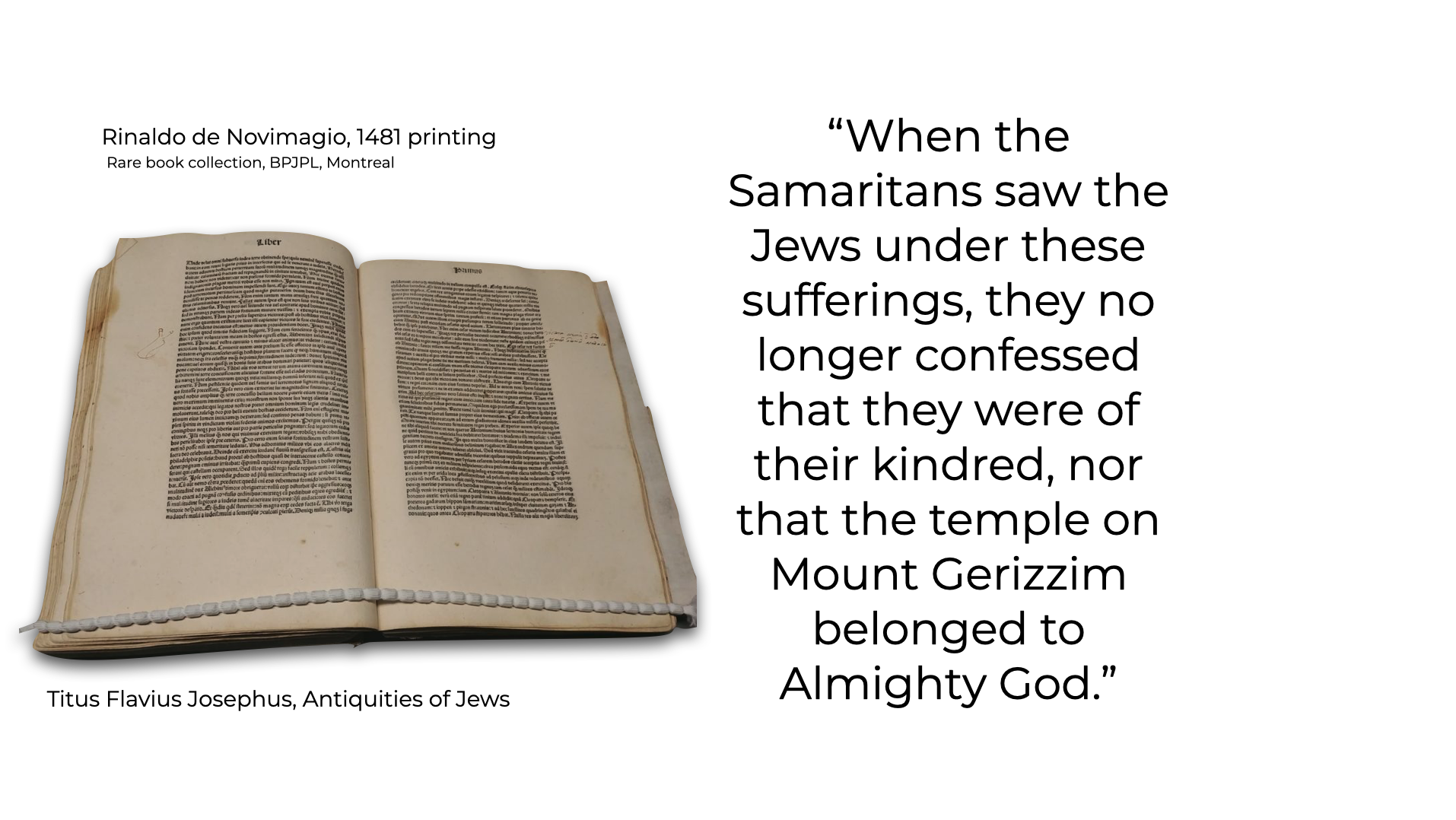
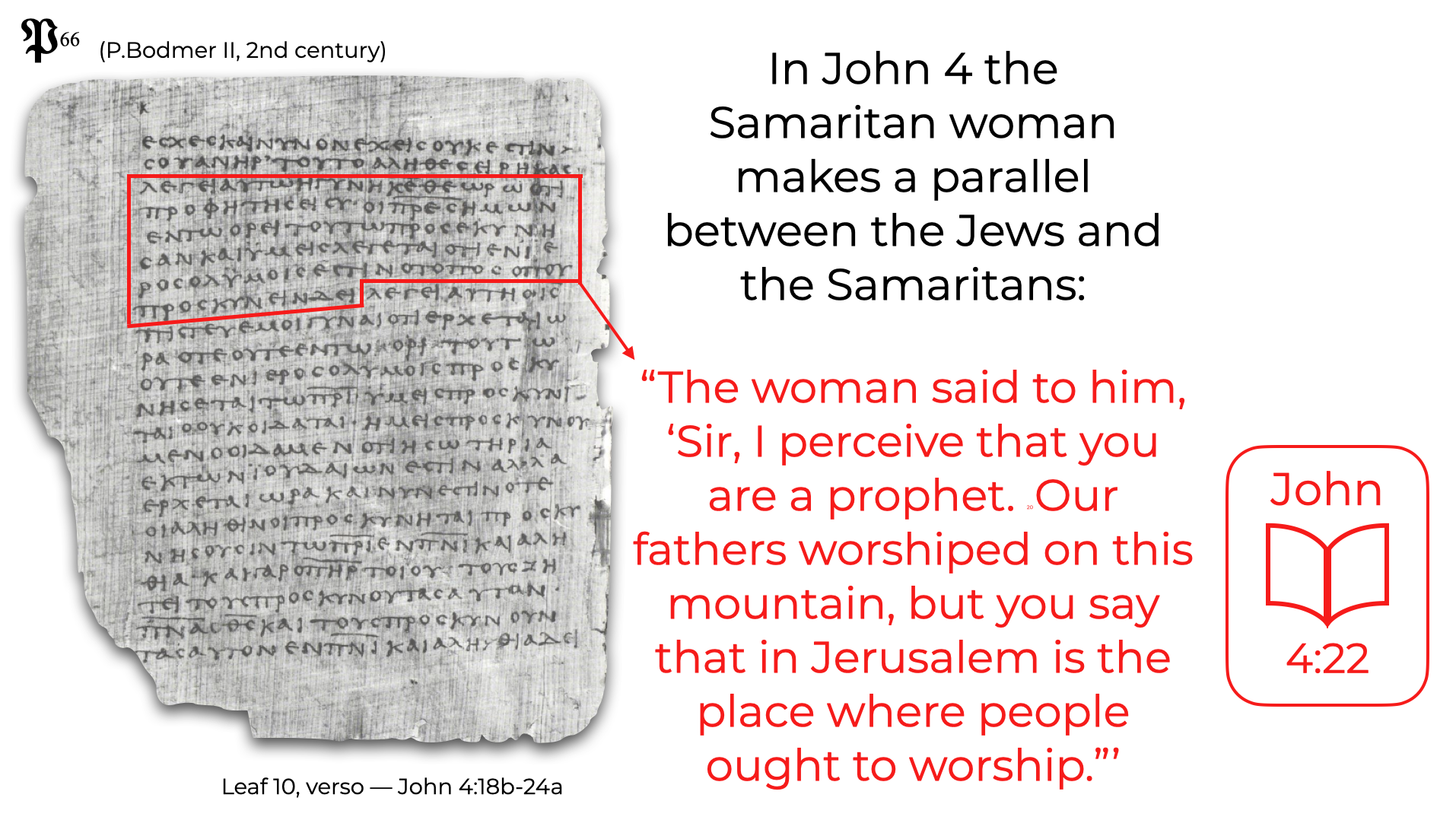
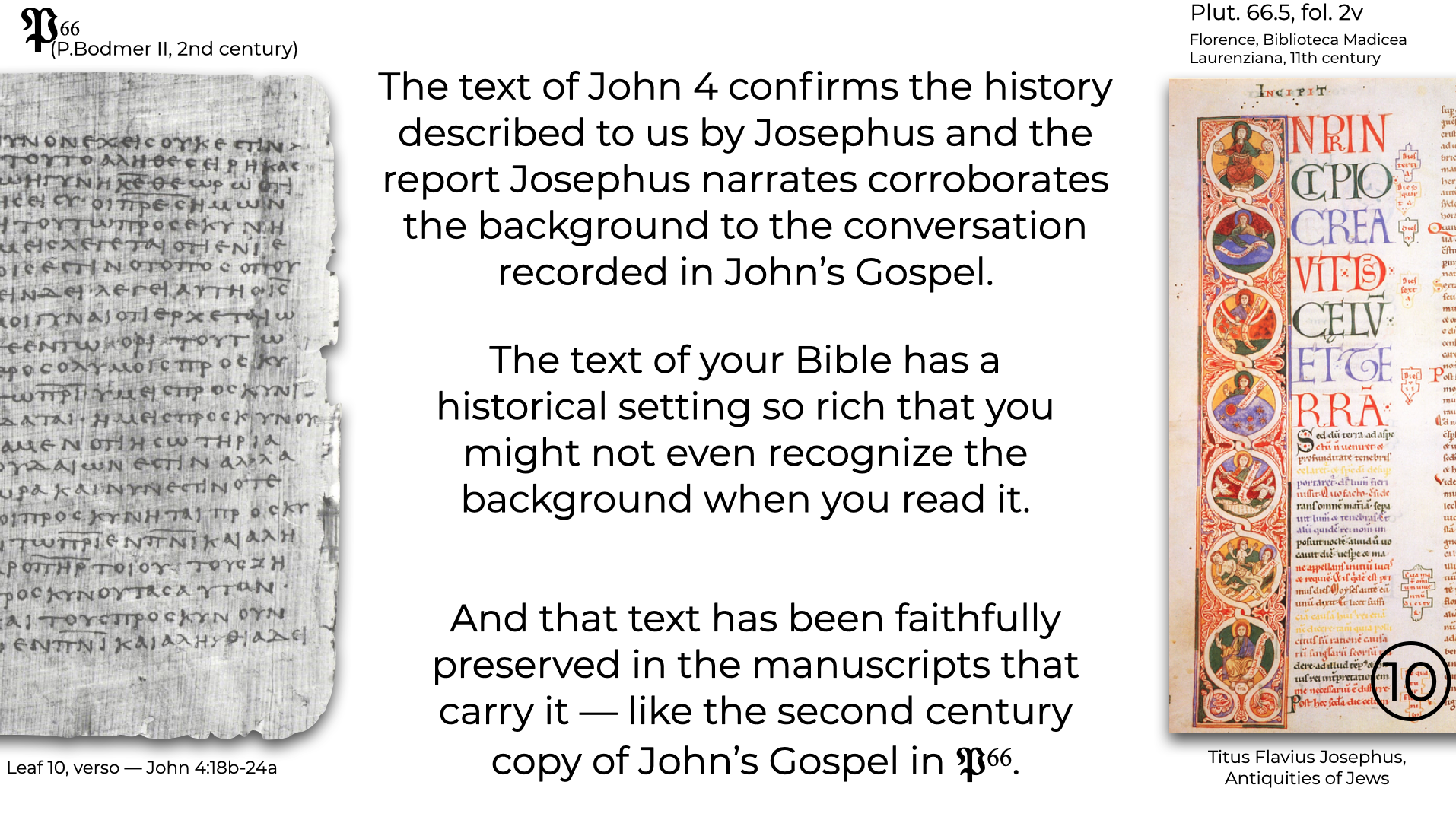
Manuscripts confirming Jesus, Josephus, and the Woman at the Well
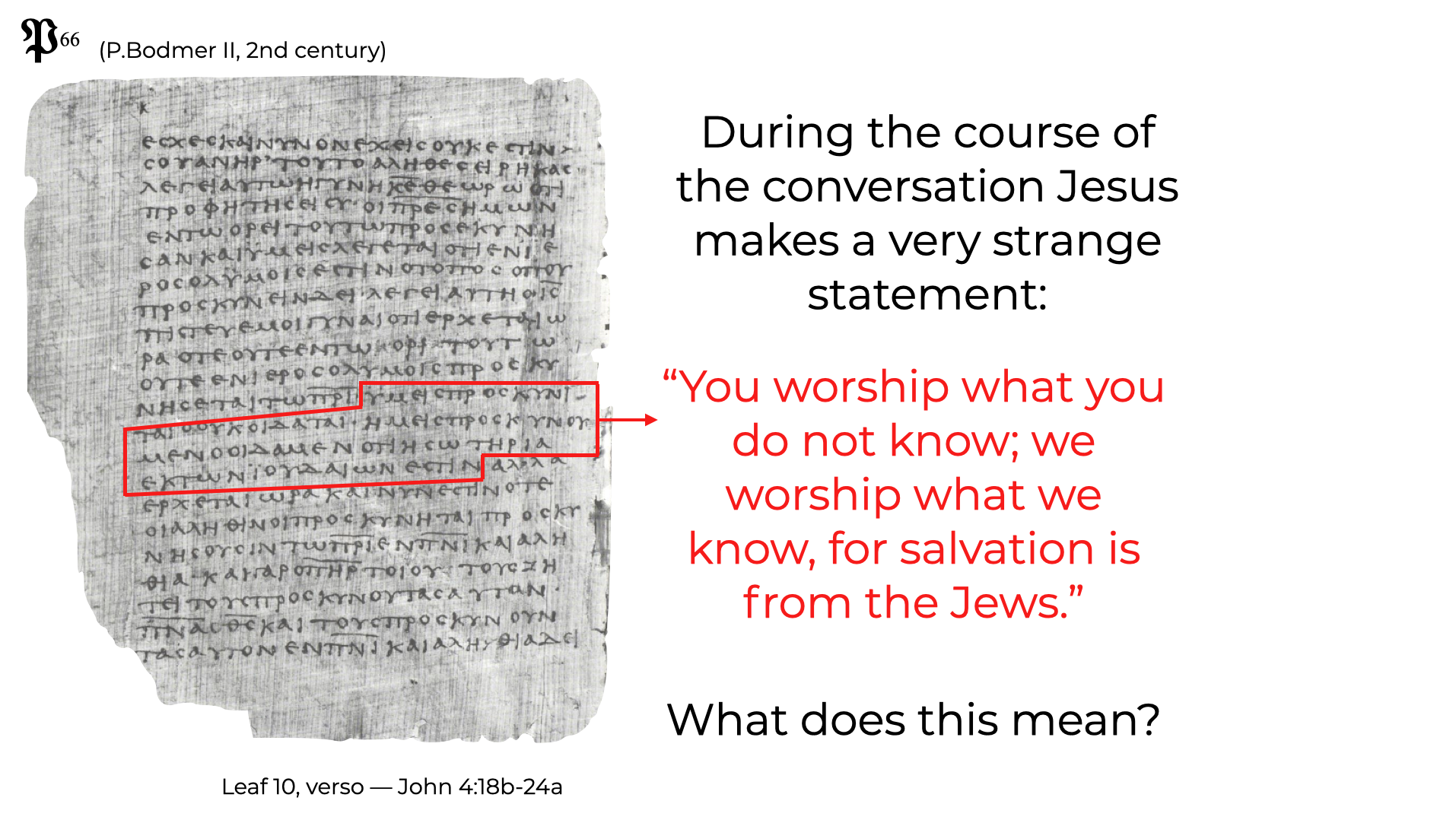
In John 4 we have the story recorded for us of a conversation between Jesus and a Samaritan woman at a well in the land of Samaria. During the course of the conversation Jesus makes a very strange statement…






Some of the most ancient and most notable New Testament manuscripts


P52 (aka John Rylands 457) is one of the most notable New Testament manuscript fragments. Potentially the earliest extant piece of documentary evidence for the biblical New Testament, this papyrus fragment was discovered by C.H. Roberts in the basement of the John Rylands Library in 1934.
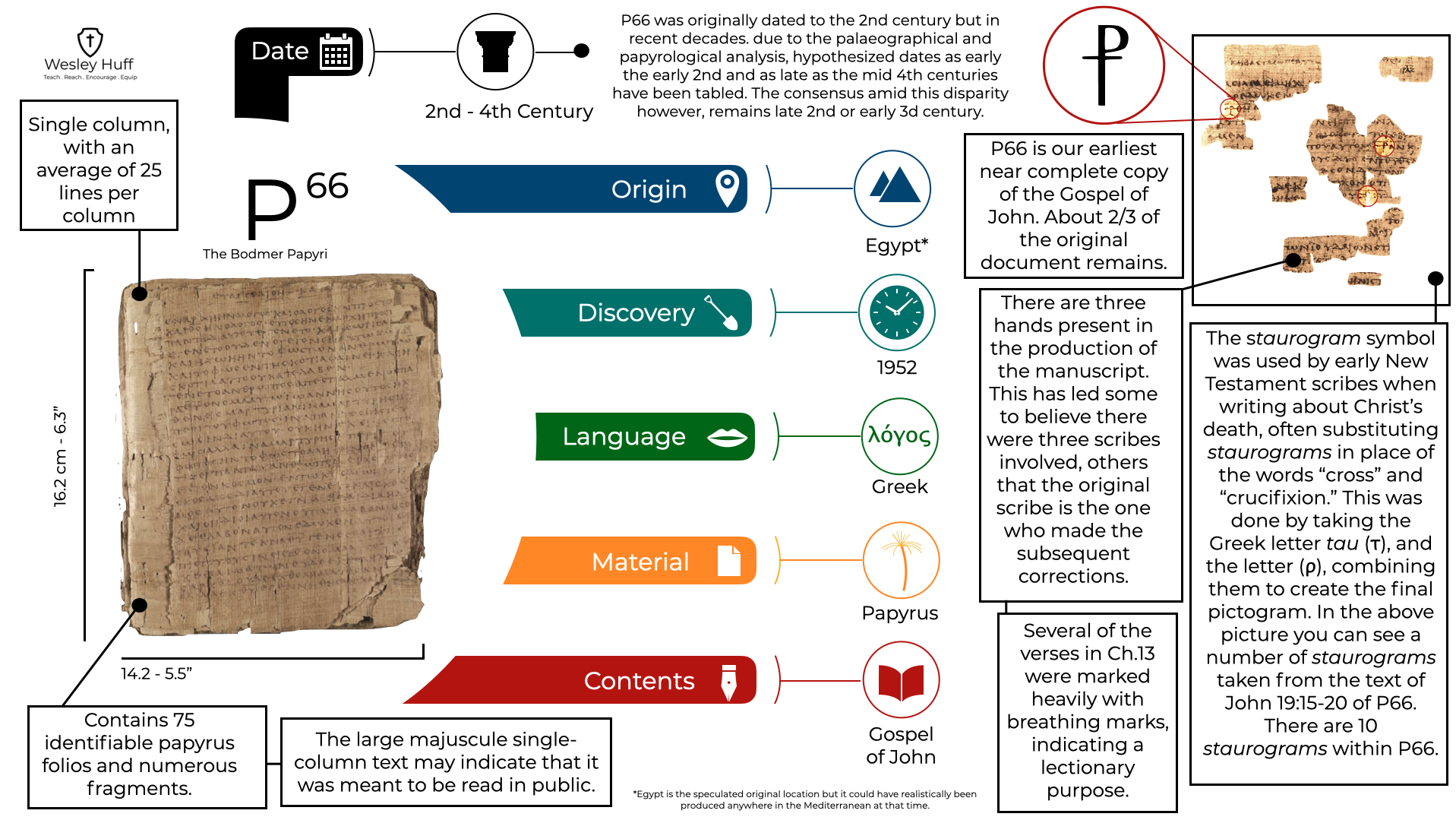
P66 (aka P.Bodmer II) is one of the earliest and most well preserved copies of the Gospel of John. Containing 2/3 of the entire Gospel, its discovery and publication surprised scholars due to the first 26 leaves being almost entirely intact. Ancient codices (what we would think of as a book) tend to lose most of the top and bottom sheets due to those being the most vulnerably exposed. Dated as early as the second century and as late as the fourth century, it nonetheless is in incredible shape considering its age. P66 is currently housed at the Bibliotheca Bodmeriana, in Cologny, just outside Geneva.

P75 (aka Papyrus Bodmer XIV XV) is a 2nd or 3rd century manuscript text of Luke and John. Owned originally by Martin Bodmer and later donated to the Vatican where it is housed to this day. The text of P75 has a striking similarity to the 4th century Codex Vaticanus, which when discovered and evaluated, opened up a conversation both the scholarly perception of the text in its early form and as well as the function and purpose of Codex Vaticanus as a major codex.

P46 (aka P. Chester Beatty II), was discovered somewhere in the Fayum of Egypt, near what is beleived to be the ruins of a monastery near Atfih. It is one of our earliest collection manuscripts, that is, instead of being a single independent document it is a grouping of the Pauline epistles. Very early on the four Gospels and the Pauline epistles were being grouped together in collection codices, pointing to their significance in the early Christian community as prominent and important writings. One significance to this is that the P46 collection includes the book of Hebrews. While the majority of modern scholarship (correctly in my opinion) believes that Hebrews was not in fact written by Paul, it does appear that the collector of P46 did.

Whatever it is, the way you tell your story online can make all the difference.
Codex Sinaiticus (aka א) is one of the most important Bibles in the world. The project started in the Middle of the fourth century and it marks our earliest surviving complete copy of the Christian New Testament in one volume. Having been in regular use for what is estimated to be around 600 years, Sinaiticus was eventually rediscovered at the Monastery of St. Catherine, at the base of Mount Sinai, in the nineteenth century by German biblical scholar, Constantine Tischendorf.

Codex Vaticanus ( aka B ) is one of the most important Bible’s in the world. The document has been housed in the Vatican Library since the 16th century and was largely made known to the world of Western biblical scholarship due to Erasmus’ correspondence with Bombasius in Rome in order to consult this important 4th century manuscript. Erasmus did so in order to see whether 1 John 5:7-11 was included in the most ancient readings of 1 John. The reading was not and so Erasmus (rightly) left it out of his 1st and 2nd editions of his Greek New Testaments. The 3rd edition did include 1 John 5:7-11 but this was largely due to pressure from the church authority at the time. Erasmus’ 3rd edition played a key role as an early edition of the primary texts used by the KJV translators and is one of the main reasons why 1 John 5:7-11 is in the King James today but not in modern translations.
What are the Biblical Autographs?

With a desire to defend a high view of Scripture, potentially in juxtaposition to an increasing skepticism towards the Bible over the last century or so, the Chicago Statement on Biblical Inerrancy, a theological Statement formed in 1978, states in Article X that:
“We affirm that inspiration, strictly speaking, applies only to the autographic text of Scripture,which in the divine providence of God can be ascertained from available manuscripts with great accuracy. We further affirm that copies and translations of Scripture are the Word of God to the extent that they faithfully represent the original.”
This is an important and carefully crafted statement. However, in many theological, apologetical, and biblical discussions, the term “autograph” and “original text” has been used in ways that they were never intended by the scholars who coined the terms in the first place.
The autograph
Some have argued that there is no use to say “the originals were inspired or inerrant” if we no longer have the originals. As one popular pastor put it recently in a video commenting on how he understood the term “inerrant”:
“[T]he doctrine of inerrancy only applies to the original autographs, the original copies — which we don’t have any more. But we do have a number of early copies, enough to get us pretty close to what the originals would have said; but it raises the question, if God didn’t preserve the originals did his inspiring and preserving work of the Holy Spirit apply to the copying process over hundreds and hundreds of years?”
This would be a plausible statement if what scholars meant by “the original autograph/text” was the physical document that the initial author wrote on. The problem with such a statement is that is almost entirely not what is meant when scholars refer to these very specific terms.
Doctrinal statements, apologists, and theologians are, on the whole, wise to point out that authorial copies of the New Testament are distinguished from subsequent various textual forms and alterations introduced throughout the decades, centuries, and millennia since their inception.
The doctrines of inspiration, inerrancy, and infallibility are not fundamentally affected by textual variances throughout the manuscript tradition. This is both an accurate and attentive feature to highlight. At the same time however, these same individuals often conflate the autographs as physical artifacts and the text of the autographs themselves.
Physical copies and their words
Within the contemporary Christian world we need to be careful to distinguish between the autographs as the first written copies and the words on those copies. Scholars who work within the field of ascertaining the original text of Scripture have less interest in the physical material (i.e. the papyrus, vellum, or parchment) than they do with the text found on them (there are entirely separate disciplines that study the physical materials such as papyrology and palaeography).
Therefore, when textual critics refer to the “original text” or “original autographs” they may be (but probably are not) talking about the material document as much as they are the original wording on the original document. This is a point that the Chicago Statement does a good job of highlighting when it states that inspiration, “applies only to the autographic text of Scripture.”
The origin of the confusion partly sits at the feet of the scholars who use these technical terms. Sometimes scholars do not succinctly define their terminology when using such phrases as “original text” or “original autograph”. Therefore, when popular level writers, pastors, defenders of the faith, even professional apologists and scholars in adjacent fields, read or hear about the “original autographs” or “original text” they may assume that what is in focus are the first copies of a said document — but that is hardly ever if at all the case.
In fact, if you have been following the field of New Testament textual criticism as of late you will have noticed that the designation “autograph” (or its German originator autographa) has become somewhat of an outdated term. There are many reasons for this, whether that be a growing suspicion in recent scholarship as to whether one can truly derive the original text or whether it is in an effort to not confuse the physical document of the autograph with the original text on the autograp.
The question is: if “all Scripture is God breathed” (2 Tim. 3:16), did God breath into the papyrus or leather, or is it the words, message, meaning, and intention of Scripture that was divinely inspired? We as modern Christians can stand in a long line of succession with theologically minded believers throughout history in saying that it is not the material that is the focal concern but the text found on said material.
God has inspired, preserved, and given to us His Word which is sufficient as the sole infallible rule of faith and practice for the church. Any dispersion on the inspiration, reliability, and trustworthiness of Scripture on the basis of not possessing “the originals” falls flat. It does so because we have incredible confidence that we know what the words on those originals were to begin with.
For more related to this topic read:
One Bible, Many Versions
Were the Gospels Anonymous?
Why Trust the Bible? (P.1)
Why Trust the Bible? (P.2)
Did Jesus Speak Greek?
What happened at the Council of Nicaea?
Why I date the Gospel of Thomas late?
First Century Mark - Fragments and Figments of our Imagination
Were the Gospels anonymous?

The majority of modern New Testament scholarship today believe that the canonical Gospels (Matthew, Mark, Luke, and John) were originally penned and circulated anonymously. The thinking being that these documents were what is sometimes referred to as being “formally anonymous,” in that, if you removed the “Gospel According to …” title from the front page and remained with the content you would not necessarily know who the author was. New Testament scholar Rudolf Pesch notes in his commentary on the Gospel of Mark that the “Gospel of Mark was without doubt published anonymously… all inscriptions and subscriptions in the Gospel manuscripts are late.” As Richard Backham notes:
“The assumption that Jesus traditions circulated anonymously in the early church and therefore the Gospels in which they were gathered and recorded were also originally anonymous was very widespread in twentieth-century Gospel scholarship. It was propagated by the form critics as a corollary to their use of the model of folklore, which is passed down anonymously by communities. The Gospels, they thought, were folk literature, similarly anonymous. This use of the model of folklore has been discredited… partly because there is a great difference between folk traditions passed down over centuries and the short span of time — less than a lifetime — that elapsed before Gospels were written. But it is remarkable how tenacious has been the idea that not only the traditions but the Gospels themselves were originally anonymous.”
(Bauckham, Richard, Jesus and the Eyewitnesses: The Gospels as Eyewitness Testimony (Grand Rapids, MI: Eerdmans, 2006), 300.)
The tenaciousness that Bauckham mentions was indeed the reality of twentieth century New Testament scholarship. This of course is not limited to the past century, as testified by Pesch’s statement. However, the confidence of scholars like Pesch I believe exceeds what the evidence actually indicates. To say that it is “without doubt” that Mark was published anonymously is a very big statement given the fact that the evidence for it seems to be mixed.
This is not to say that Pesch and the majority of scholars’ assertions regarding Gospel authorship and anonymity could not be true. It could be. Majority views are important, and so, if one is going to make an assertion to the contrary of the majority view there better be good reason and sufficient evidence pointing towards that case. The question then is where does the preponderance of evidence point when it comes to Gospel anonymity and what should our conclusions be from said evidence?
What if they were anonymous?
Here’s the reality: if the Gospels were penned anonymously not that much would truly be impacted. A good many works from antiquity are formally anonymous. Other documents within the Christian Scriptural canon are anonymous. 1st and 2nd Chronicles and 1st and 2nd Kings from the Old Testament or the book of Hebrews from the New Testament, all formally anonymous. Not knowing the identity of the author of these books in no way jeopardizes their authority or credibility. From outside the Scriptures themselves we have the works of Philo of Alexandria, the famous Jewish thinker from the first century BC, are written with no formal mention of the author’s name within the document. If the Gospels were written in this way it would not jeopardize the reliability of their content. There are many internal and external methods of verification to identify the biblical Gospels as early, eyewitness-based accounts of the life of Jesus of Nazareth— with or without a direct ascription to who the author was or wasn’t.
No originals
We are also left with the reality that every writing from the ancient world falls into — we do not possess the original copies. The collection of writings we call the New Testament are approximately two thousand years old and the originals documents that the authors penned have been lost to the sands of time. With the loss of the originals we also have the disappearance of any first-hand evidence that they were or were not titled with the authors name. For this reason it cannot be known whether Matthew, Mark, Mark, Luke, or John inscribed a title to his Gospel account or not.
Author identities
It cannot be discounted that at least two of the Gospel accounts, Mark and Luke, have traditional ascription to non-disciples. If the Gospels did circulate anonymously in their earliest forms then why eventually assign names of particularly unimpressive characters to them? Why not vouch for and chose individuals who had early and widely accepted notoriety as key individuals within the Jesus community? Neither Mark nor Luke had an outstanding reputation as particularly noteworthy individuals. Both individuals in their respective identification traditions have links to others. Mark’s Gospel is reported to have found his source material in Peter. Why not then call this account The Gospel of Peter? If a Gospel account is anonymous why then almost unanimously settle on Mark, the cousin of Barnabas, who deserted the first missionary journey with Paul and went home (Acts 13:13, 15:37-39)?
This could even be argued for Matthew, a character about whom almost nothing is known and whose only claim to fame (outside of penning the Gospel) is that he was a tax collector in the Gospel narratives. Tax collectors were not exactly the most popular of Characters in first-century Roman occupied Galilee. So to choose Matthew over and above other characters within the narrative seems odd. Why not select clearer heavy hitters? Why not associate the earliest narrative accounts of Jesus with weightier apostolic authority? Especially, and with particular note, to the other Gospels that start to pop-up in the second century and following which make explicit claims to the authorship of characters like Philip, Mary, Peter, and Thomas.
Why do any of that, unless of course, the traditional attributions were in fact the authors?
Consistency in Titles
The strongest evidence against traditional authorship being straightforward would be the earliest manuscripts themselves showing diversity in attribution of the author. For example, if we were to find multiple copies with the text of what we now call the Gospel of Matthew with a different title, say, the text of the Gospel of Matthew with a heading of the Gospel of Peter, or the Gospel of John, then this would be warrant for pause. The problem however, is that we find no such thing. There are no competing claims of titled authorship in any of the manuscripts that survive with a title heading. In every single text that we have where the beginning or the ending of the work survives (the two places we find such titled inscriptions), we find the traditional authorship assigned.
These surviving copies are rare, granted, but not unprecedented. P75, for example, which dates somewhere in the mid to late second century, on leaf 47 (recto) has a very clear “εὐαγγελίον κατα Λουκᾶν” (“Gospel According to Luke”) at the end of the book (Luke 24:53).

Manuscript photograph of P75 courtesy of CSNTM’s Manuscript database. Original manuscript is housed in the Vatican Library (Pap. Hanna. 1).
Although not as nicely preserved in its incipit, another second century Gospel, P66, begins with the title “εὐαγγελίον κατα Ἰωάννην” (“Gospel according to John).

Manuscript photograph of P66 courtesy of CSNTM’s Manuscript database. Original manuscript is housed in at Foundation Martin Bodmery (Université de Genève in Geneva, P.Bodmer II).
All of our major Codices from the fourth and fifth centuries likewise include (at either the very beginning of the very end) an identifier of the author with the traditional name associated with the document. There has yet to be discovered a copy of a biblical Gospel with an inscription of a different name other than the traditional author.
The Manuscript Evidence: No Anonymous Gospels

Pitre, Brant, The case for Jesus: The biblical and historical evidence for Christ (New York: Penguin house Llc, 2016), 17.
What does all this mean?
Where this leaves us is with, in my estimation, relatively sound evidence to conclude that the names of the four canonical Gospels are indeed the authors. Although the early church testimony to these authors was not necessarily discussed in this particular blog, this early testimony also adds to the verification of the authors being the namesakes we associate with those particular documents. Of course it is theoretically possible that these documents were originally circulated anonymously, from the estimation of the evidence I do not believe that to be the case.
For more:
What Happened at the Council of Nicaea?

It’s a common accusation, “the books of the Bible were chosen at the Council of Nicaea.”
I have read it in books and internet forums as well as heard it from laypeople and academics. It is a line that has been repeated over and over, having taken on a life of its own due to the popularity of Dan Brown’s The Da Vinci Code and the explosion of promulgation due to the internet.
One of the main characters in the Da Vinci Code, Leigh Teabing, states at one point that, “Constantine commissioned and financed a new Bible, which omitted those gospels that spoke of Christ’s human traits and embellished those gospels that made him godlike” (Brown, 325). These sort of ideas didn’t start with Dan Brown, the story in one form or another has been floating around for decades and even centuries before any such works of popular fiction. So the valid question that follows is: what did happen at the Council of Nicaea?


What happened at Nicaea?
The first Council of Nicaea, which took place between May and August in 325 AD in what is now İznik, Turkey, was an ecumenical council called to deal with a specific theological problem. Its purpose was to sort out the Arian Controversy––a Trinitarian heresy being promoted by a presbyter in North Africa named Arius, teaching not only that the Son of God was eternally subordinate to the Father, but that the Son was not everlasting but created by God the Father at a specific point in time. Arius, in his letter to Alexandria, wrote that: “The Son, being begotten apart from time by the Father, and being created and founded before ages, did not exist before his generation… the Son is not eternal or co-equal or co-unoriginate with the Father” (Letter to Alexandria 4:458).
There is even a story that developed later that St. Nicholas (yes, good St. Nick himself), struck Arius in the face during Nicaea after Arius stood up and uttered his famous statement that, “there was a time when the Son was not.” While the visual of Santa punching heretics in the face makes for a good laugh and a fun story, the narrative developed later and cannot legitimately be tied to anything that actually happened historically at the council.
The end result of the assembly was what is now known as the Nicene Creed, along with twenty canon decrees and a synod epistle that went along with the creedal statement. Within all of these documents, Nicaea quotes the New Testament books as authoritative and acknowledged the supremacy and jurisdiction they held. All 318 members (even the unorthodox ones as far as we can tall) recognized the rule scripture possessed already, they did not invent the status it held. The twenty-seven books of the New Testament were being read, studied, preached, and declared as God’s holy Word hundreds of years before anyone at Nicaea was even born.
There is no evidence from any of the documents that came out of Nicaea nor from the testimony of witnesses and members who were there (Eusebius, Athanasius, or Eustathius, for example) that any part of the council had anything to do with choosing or establishing the canon of Scripture. So where did this idea originate from? Well, there are two possible sources where the myth could have originated and taken on a life of its own.
One of these options has ancient origins with the other being a little more contemporary. The first comes from a line in the commentary on Judith by Jerome (347–420 AD). In the preface to his work on Judith, Jerome states: “But since the Nicene Council is considered to have counted this book among the number of Scriptures, I have acquiesced to your request (or should I say demand!).”
It is important to note that Jerome’s statement does not necessarily mean that Nicaea chose books but could have merely discussed the topic and in the framework of that discussion included writings some may have considered Scripture. That does not mean they were Scripture and certainly doesn’t mean they bestowed any such documents with the authority of Scripture. The content of this single quote is a far cry from any type of vote, of which we have no evidence for. It is also key to take note that other key players present at Nicaea like Athanasius, Gregory of Nazianzus, and Hilary of Poitiers, all rejected Judith as canonical Scripture in their subsequent canon lists.
Judith likewise, is quite an odd candidate as it contains numerous blatant historical errors (saying Nebuchadnezzar was “king of Nineveh,” not of Babylon, for example) that both Jews and Christians over the centuries have pointed out as highly problematic. Given all of the evidence of what we can see definitively did take place at Nicaea, it is also possible that Jerome was simply incorrect, or that his statement did not intend to point to an instance of a vote of choice, but rather, a discussion that included books others supposed held some authority (for more on Jerome’s intentions see Ed Gallagher’s article in the Harvard Theological Review). Whatever the case this may or may not be where the first echoes of the whole “the Bible was chosen at Nicaea” started. Personally, however, I don’t think that’s where it came from. I think that the account derives its origins from a source a little closer to our time than Jerome of Stridon.
The Modern Nicaea Myth
Unlike a passing comment from Jerome, the way the narrative is so definitively presented in many modern forms appears to be from a pseudo-historical ninth-century Greek manuscript known as the Synodicon Vetus. The Synodicon Vetus claims to present information on church councils and synods from the first to the ninth centuries. At the section regarding Nicaea it says the following: “The council made manifest the canonical and apocryphal books in the following manner: placing them by the side of the divine table in the house of God, they prayed, entreating the Lord that the divinely inspired books might be found upon the table, and the spurious ones underneath; and it so happened.”
According to this document the source of what we now know as the New Testament canon originates from a miracle that took place when those present at Nicaea prayed over a collection of canonical and apocryphal books. The claim by this narrative is that the documents that were indeed “divinely inspired books” stayed on the table and those that were “spurious” found their way underneath it by miraculous means.
The Synodicon Vetus then appears to have been passed through the hands of a number of individuals over the centuries; the original Greek document eventually making its way into the possession of an individual named Andreas Darmasius in the sixteenth century. It was subsequently bought, edited, printed, and published by a German man at the beginning of the seventeenth century named John Pappus.
Pappus’ publication made its way into the hands of none other than the French Enlightenment thinker Voltaire, in the late seventeenth century. In Vol. 3 of Voltaire’s Philosophical Dictionary, under “Councils” he says: “We have already said that in the supplement to the Council of Nicaea it is related that the fathers, being much perplexed to find out which were authentic and which the apocryphal books of the Old and the New Testament, laid them all upon the altar, and the books which they were to reject fell to the ground. What a pity that so fine an ordeal has been lost!”
The publication of Synodicon Vetus in the seventeenth century, and the use of its narrative by Voltaire in his Dictionary, appears to be the origin of the modern myth. Dan Brown did not invent it, but he certainly took advantage of the story and ran with it. Since the advent of the internet, where both truth and falsehood can spread like wildfire and are even harder to tell apart, the “Council of Nicaea chose the books of the Bible” fable is sure to live on. However, when one actually evaluates the evidence of both what happened at Nicaea, as well as how the formation of the biblical canon came together, it is clear that anyone who is interested in the truth can see what did happen at Nicaea, of which had nothing to do with choosing or rejecting Scripture.
Conclusion
The early Christian communities were very concerned with truth—particularly when it came to what God had revealed. Discussions about recognizing (not choosing) the books that God had inspired took place centuries before Nicaea and would continue to be in the discussion for decades after. Nonetheless, what we can decisively see taking place at the Council of Nicaea was the quotation of the New and Old Testament books as authoritative and an acknowledgment of the supremacy and jurisdiction those books held. The participants recognized the rule Scripture possessed as God-breathed and authoritative already, they did not invent the status it held. The twenty-seven books of the New Testament were being read, studied, preached, and declared as God’s holy Word hundreds of years before anyone at Nicaea was even born.
There was no single individual or group that voted the books of Scripture into the Bible. Early Christians saw the authority that certain books held and acknowledged the authority they had. The Bible includes a list of authoritative books rather than being an authoritative list of books. The reliability and recognized inspiration of Scripture span millennia. This does not mean that there weren’t discussions about what was and wasn’t Scripture in the centuries following Christ’s death, there were. The church and its leaders went to painstaking lengths to verify the authenticity and connection of those books to an Apostle or someone who knew an Apostle and it did take time for the dust to settle on the canon of Scripture. But nothing of this process even remotely resembles the Da Vinci Code type narrative that we often hear.
Modern Christians can stand confident and firm in the historical tradition of the church leaders at Nicaea, recognizing Scripture as authoritative, true, and life-changing.